

London has long served as a high-stakes laboratory for interior design. In a city where the “dining experience” is increasingly defined by the atmosphere as much as the menu, the boundaries between architecture, fine art and hospitality have effectively dissolved. For the professional designer, London’s restaurant scene is a prime example of how to manage guest flow, layer high-performance materials and execute a narrative that begins at the threshold.
From the raw, evocative plasterwork of Clerkenwell to the high-gloss maximalism of Mayfair, these spaces represent the pinnacle of restaurant interior design inspiration. Here is our curated selection of ten London restaurants that every designer and architect should experience.
1. Bacchanalia – Mayfair
Interior Designer: Martin Brudnizki Design Studio (MBDS)
Design Concept & Inspiration
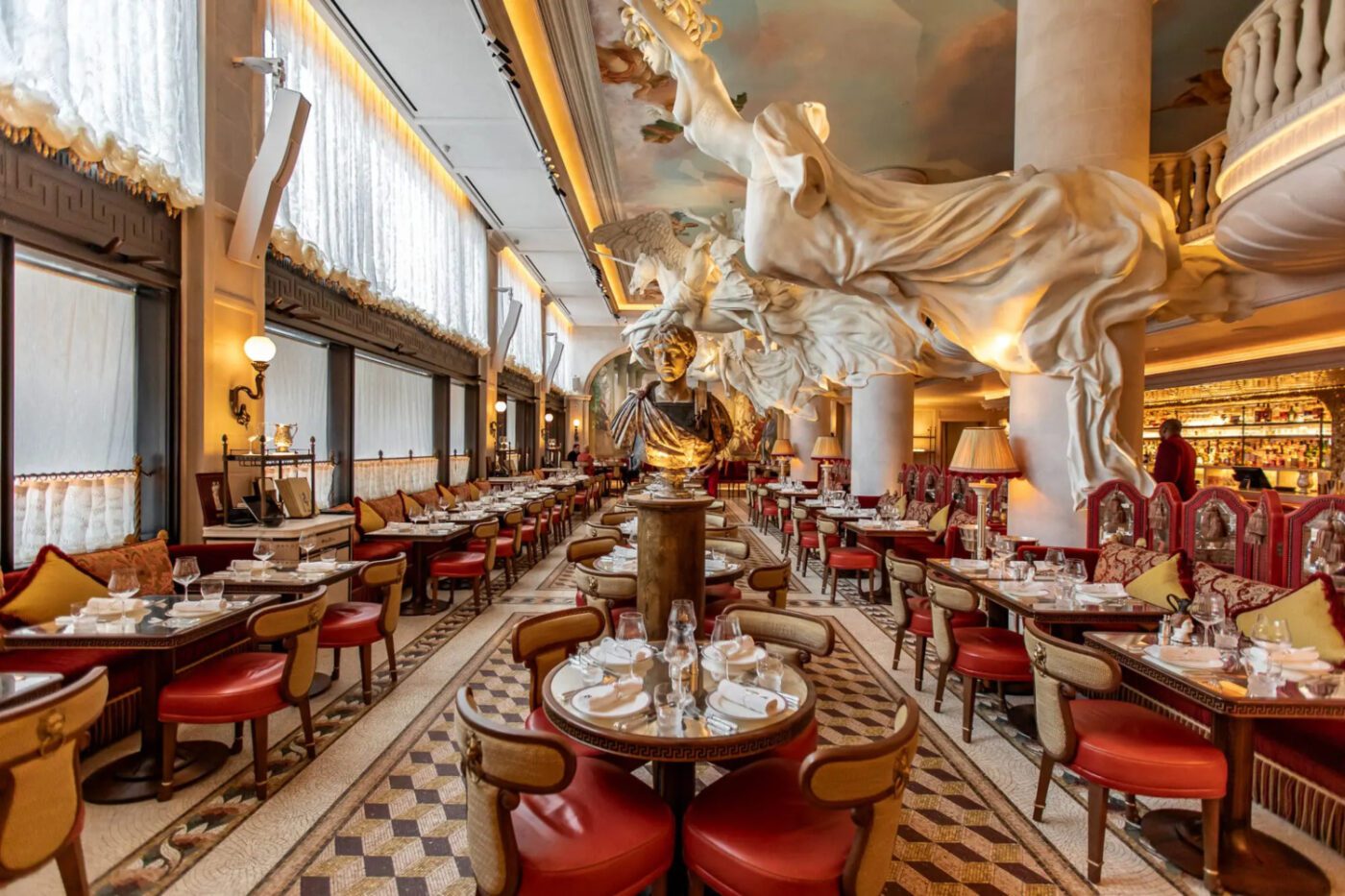
Bacchanalia is an exercise in “theatrical classicism”. Inspired by Greco-Roman mythology, the space is designed to elicit a sense of awe. It moves away from the “quiet luxury” trend, opting instead for a deliberate, high-impact narrative that feels like stepping into a modern-day myth.
Key Materials, Colours & Textures
The palette is dominated by opulent materials: hand-painted ceiling murals, floor-to-ceiling Carrara marble and Greek-inspired mosaics. 2,000-year-old antiques are interspersed with four monumental Damien Hirst sculptures, including a winged lion and a unicorn, finished in white plaster.
Furniture & Layout
Seating features deep-buttoned banquettes in rich leathers and velvets. The layout is axial and grand, with a central “stage” feel that ensures every table has a view of the architectural centrepieces.
What Makes It Unique
The sheer scale of the sculptural integration. It demonstrates how to use art as a primary structural element rather than a secondary decorative layer.
2. Sessions Arts Club – Clerkenwell
Interior Designer: Soda Studio
Design Concept & Inspiration
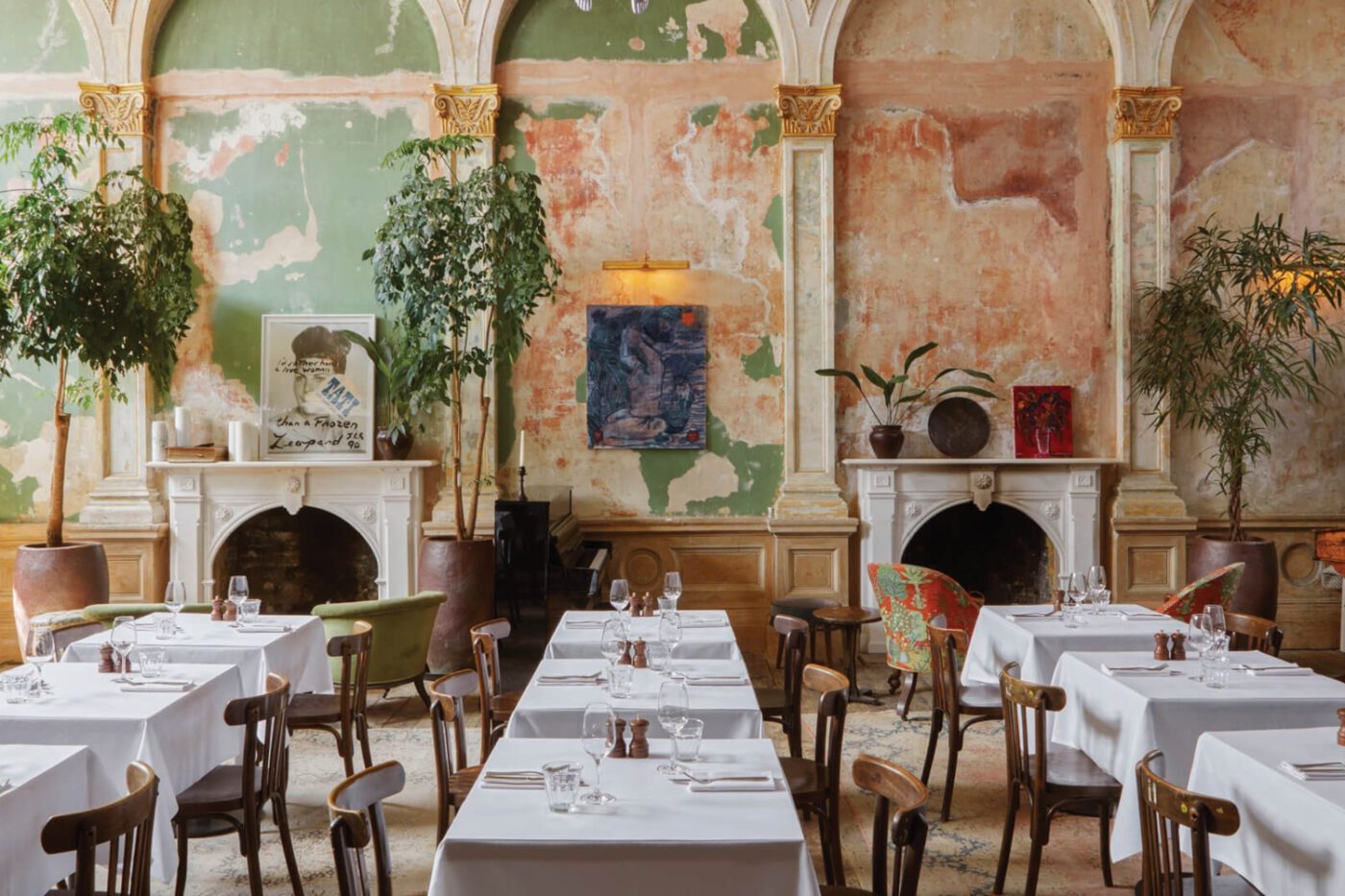
Housed in the restored Old Sessions House, this restaurant celebrates “architectural honesty”. The concept was to do as little as possible to the historic shell, allowing the building’s 18th-century patina to lead the design.
Key Materials, Colours & Textures
Distressed plaster, faded terracotta and exposed brick. These “raw” elements are balanced by high-gloss emerald green velvet upholstery and massive arched windows that flood the space with natural light.
Furniture & Layout
The furniture is a mix of reclaimed pieces and mid-century modern lines, arranged in a way that feels curated rather than “designed”. The layout utilises the mezzanine to create intimate pockets within a grand, cavernous volume.
What Makes It Unique
Sessions Arts Club proves that imperfection is a luxury finish. It’s a masterclass in how to use “found” textures to create atmospheric depth.
3. Sketch (The Gallery) – Mayfair
Interior Designer: India Mahdavi (Redesign in collaboration with Yinka Shonibare)
Design Concept & Inspiration
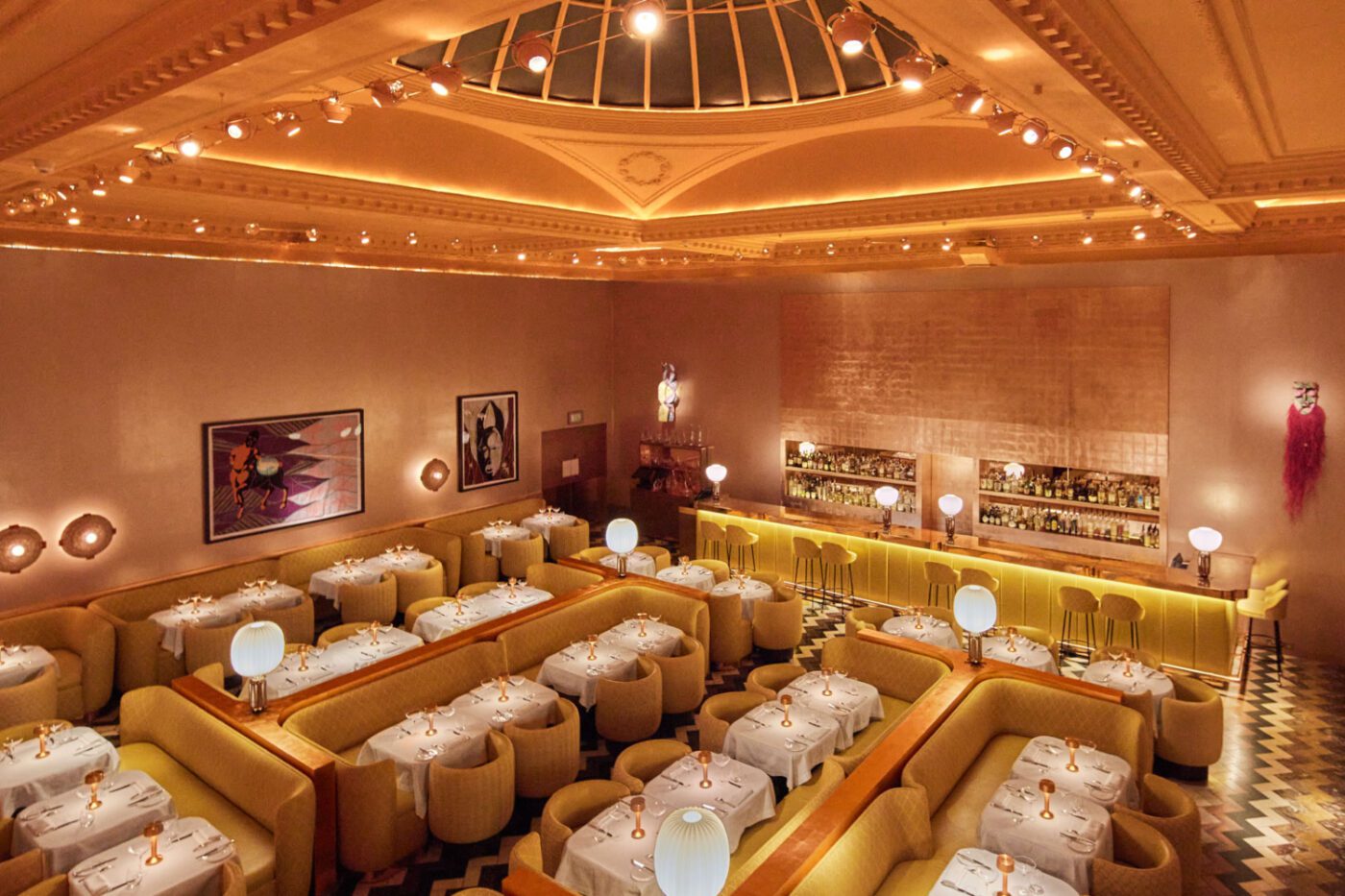
While once famous for its “millennial pink” monochrome, The Gallery was reimagined in 2022 (and updated since) into a sun-drenched, golden landscape. The concept shifted from a feminine, velvet-clad boudoir to a more textured, culturally layered environment featuring African-inspired art.
Key Materials, Colours & Textures
A palette of sunny yellows, copper and gold. The walls are adorned with Yinka Shonibare’s vibrant fabric artworks, which provide a textured contrast to the smooth, metallic finishes of the “Bishop” stools and copper-clad bar.
Furniture & Layout
India Mahdavi’s iconic “Charlotte” chairs remain, but updated in yellow. The layout is a dense, social arrangement that utilises the high ceilings to create a sense of vertical volume.
What Makes It Unique
It is a case study in colour theory. The transition from pink to gold proved that a space’s “vibe” can be completely pivoted through palette and texture without altering the underlying floor plan.
4. Hide – Piccadilly
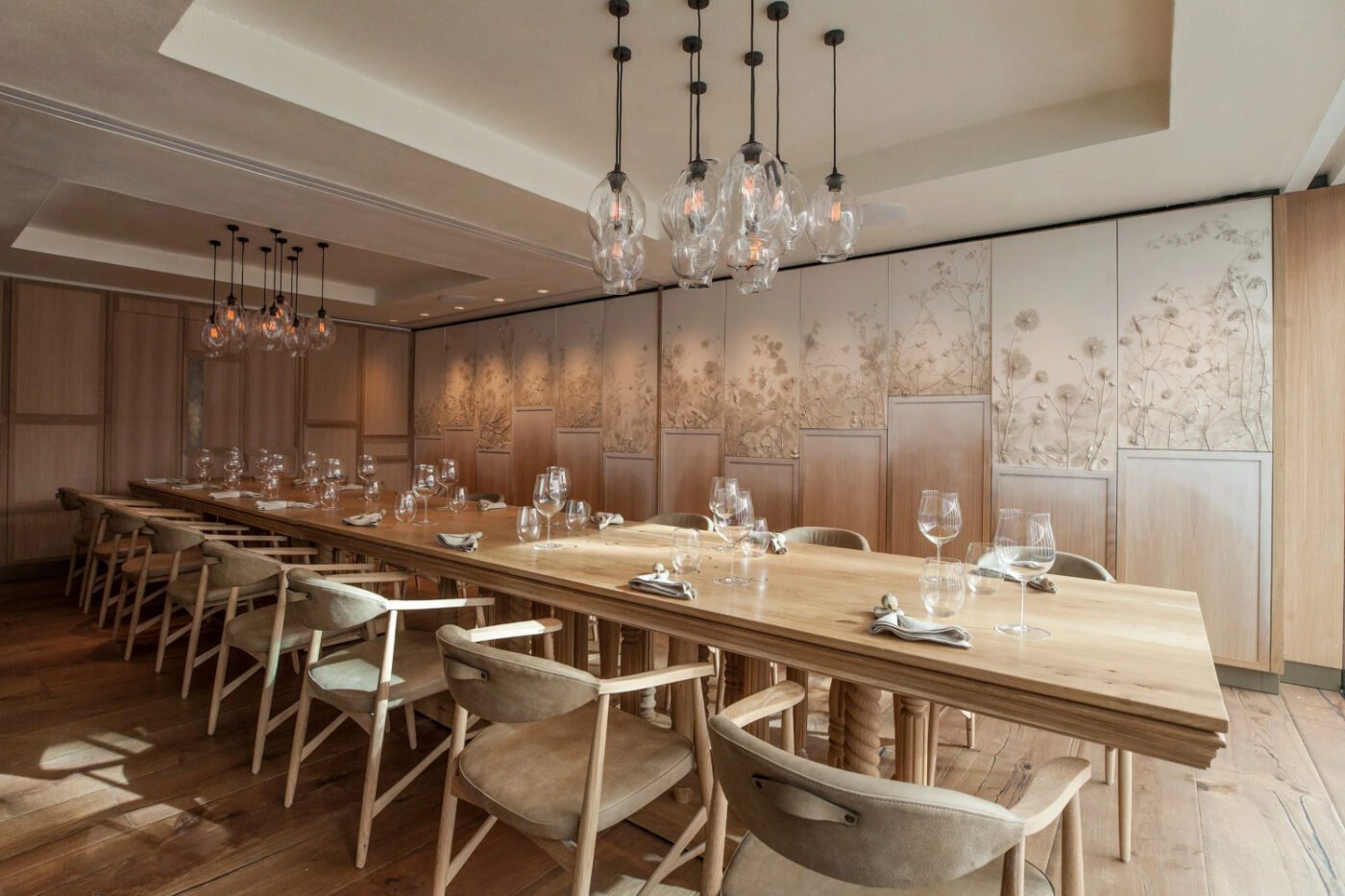
Interior Designer: These White Walls
Design Concept & Inspiration
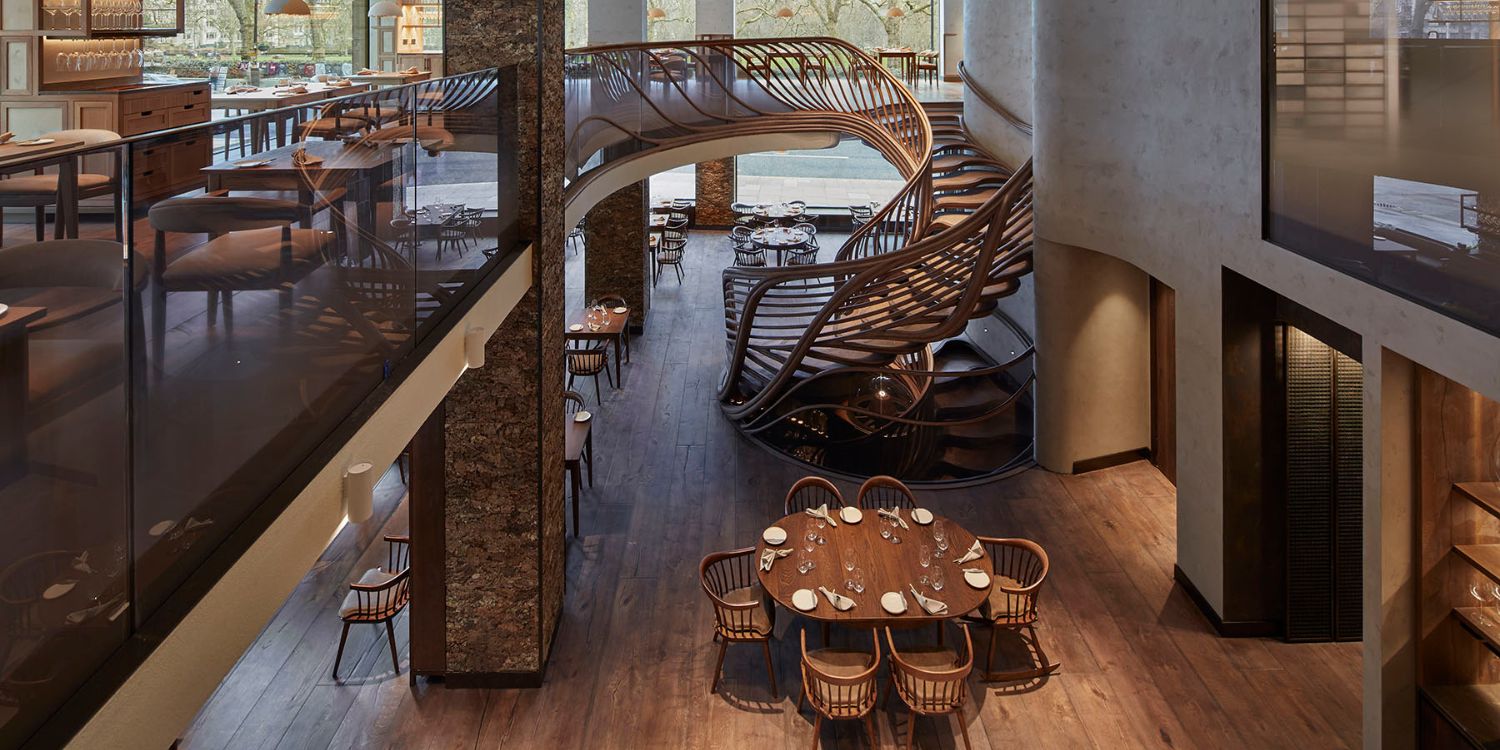
Hide is built around the theme of “Dwelling”. The design seeks to bridge the gap between the urban Piccadilly streetscape and the naturalistic greenery of Green Park. It uses organic forms to create a sense of grounded, rustic luxury.
Key Materials, Colours & Textures
A sophisticated use of timber. The restaurant features fumed oak, raw stone and hand-cast plaster panels by artist Rachel Dein. The colour story is earthy: moss greens, warm tans and mushroom greys.
Furniture & Layout
The layout is dominated by the “staircase of the century” – a Gaudi-esque, biomorphic spiral made of oak that seems to grow from the floor. Furniture includes bespoke “rocking chairs” at some tables, adding a playful, domestic touch.
What Makes It Unique
The material transition. As you move from the “Below” bar to the “Above” dining room, the wood tones transition from dark, charred oak to pale, light-reflecting timber.
5. Mount St. Restaurant – Mayfair
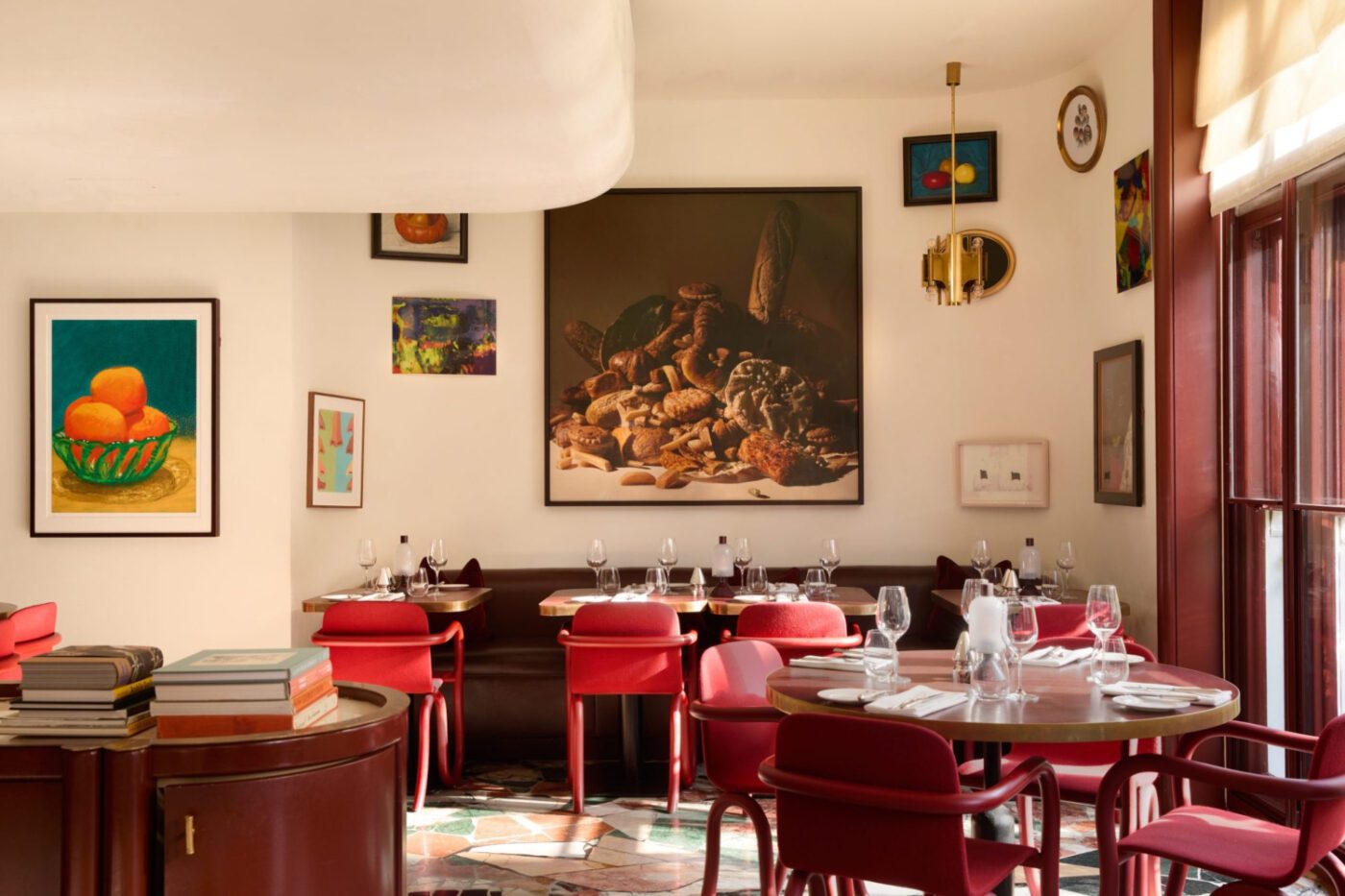
Interior Designer: Studio Laplace
Design Concept & Inspiration
The concept here is “The Art of Living”. Every inch of the space is a collaboration with world-class artists. It avoids the “gallery-white” cliché, opting instead for a warm, residential-feeling opulence that feels uniquely London.
Key Materials, Colours & Textures
The standout feature is the floor: a Palladiana mosaic by Rashid Johnson. This is paired with custom red-lacquered furniture and walls in a soft, salmon-pink hue.
Furniture & Layout
The signature curvilinear furniture provides a soft, tactile counterpoint to the rigid Victorian architecture of the building.
What Makes It Unique
The integration of the floor as a canvas. It challenges designers to think about the “fifth wall” (the floor) as a primary decorative opportunity.
6. Dovetale (1 Hotel Mayfair) – Mayfair
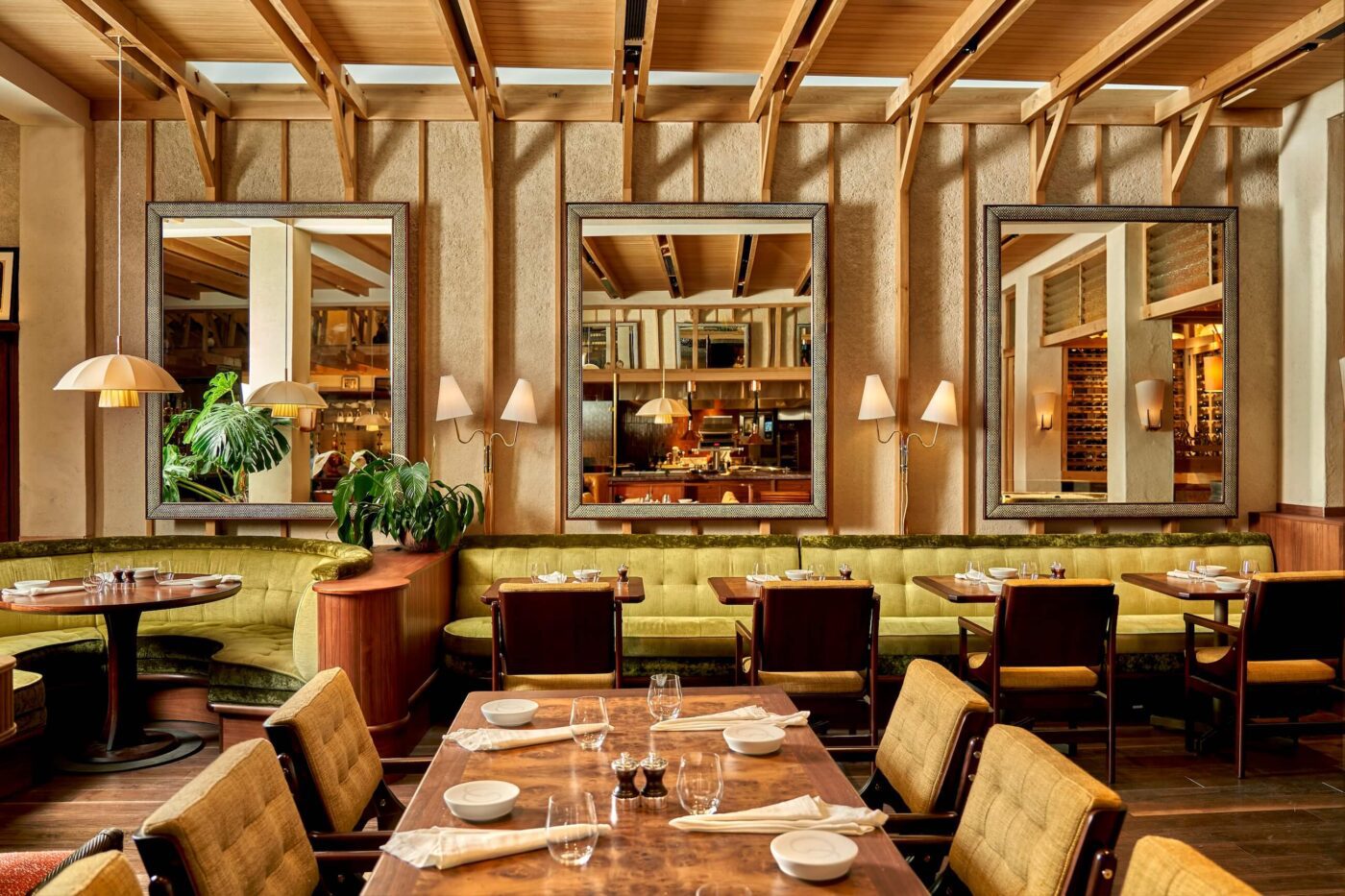
Interior Designer: GA Design / Dion & Arles
Design Concept & Inspiration
Biophilic design taken to its most refined conclusion. The Dovetale embodies “sustainable luxury”, using reclaimed materials and greenery to create a space that feels like a sheltered garden in the heart of the city.
Key Materials, Colours & Textures
Reclaimed Yorkshire stone, Welsh slate and a 200-year-old oak tree transformed into a reception desk. The lighting is low-glare and amber, designed to mimic the “golden hour” at all times.
Furniture & Layout
Seating is upholstered in natural linens and recycled fabrics. The layout is open and airy, with clear sightlines to the open kitchen, emphasising transparency – a core tenet of the sustainability narrative.
What Makes It Unique
Its energy-efficient lighting. The space uses 50% less energy than a typical five-star interior, proving that high design and high performance can coexist.
7. The Maine – Mayfair
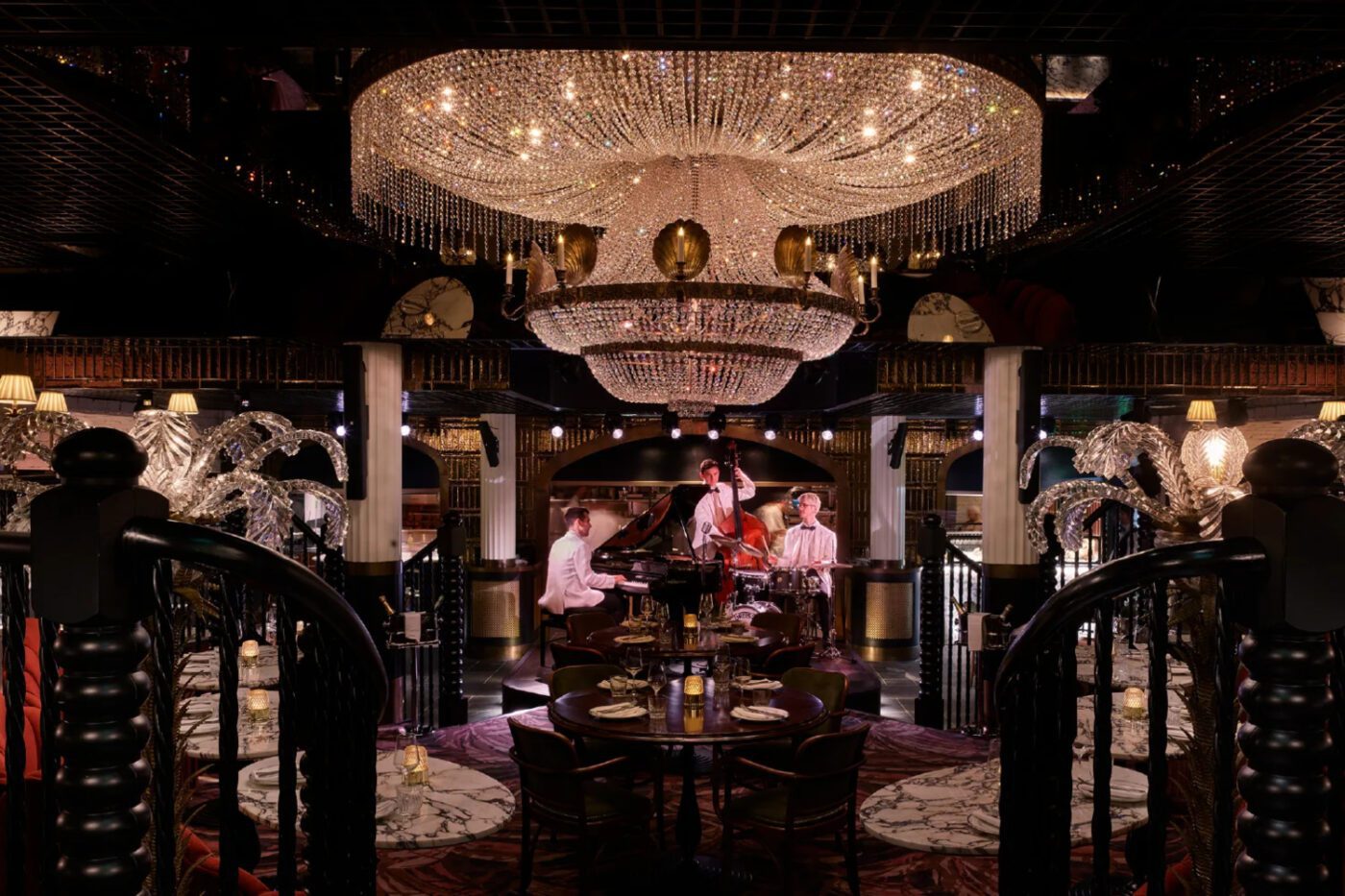
Interior Designer: Studio Shayne Brady
Design Concept & Inspiration
Located in a refurbished 18th-century townhouse, The Maine blends “New England extravagance” with British Georgian elegance. It’s designed to feel like a high-end residential estate that has been converted into a secret social club.
Key Materials, Colours & Textures
Crystal chandeliers, mirrored walls and zebra-print accents. The Tavern (the basement level) features original brick vaults and shaker-style timber pews, creating a stark contrast to the opulence of the Drawing Room above.
Furniture & Layout
The furniture is “Hollywood Regency” meets mid-century. Circular booths in the Drawing Room provide a sense of theatre, while the outdoor terrace uses iroko-clad seating to withstand the elements.
What Makes It Unique
The vertical storytelling. Each of the three floors tells a different part of the narrative, moving from the “servants’ quarters” (Tavern) to the “Duke’s parlour” (Drawing Room).
8. The Dover – Mayfair
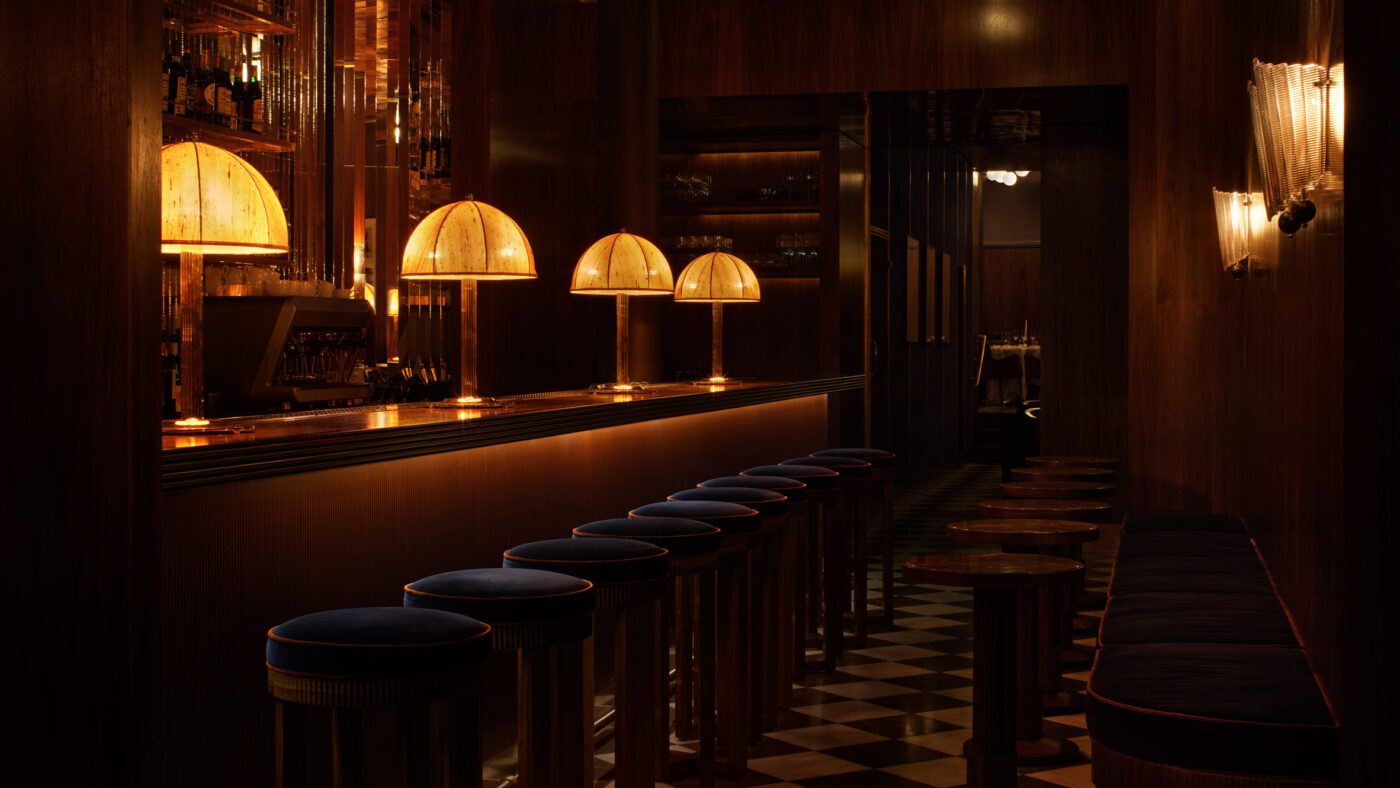
Interior Designer: Quincoces-Dragò & Partners
Design Concept & Inspiration
Inspired by 1970s New York Italian “power dining”, The Dover is an exercise in restraint and nostalgia. It’s moody, dark and incredibly flattering – a “see and be seen” space that feels timeless.
Key Materials, Colours & Textures
Walnut wood panelling, polished brass and mirrored ceilings. The palette is heavy on chocolate browns, burgundies and warm ambers.
Furniture & Layout
Deep, scalloped banquettes upholstered in mohair velvet. The layout is intimate, with low ceilings that create a “compressed” spatial experience, making the room feel buzzy and exclusive.
What Makes It Unique
The lighting choreography. It utilises “candlelight levels” of artificial light, using low-level lamps to create pools of intimacy at each table.
9. Kol – Marylebone
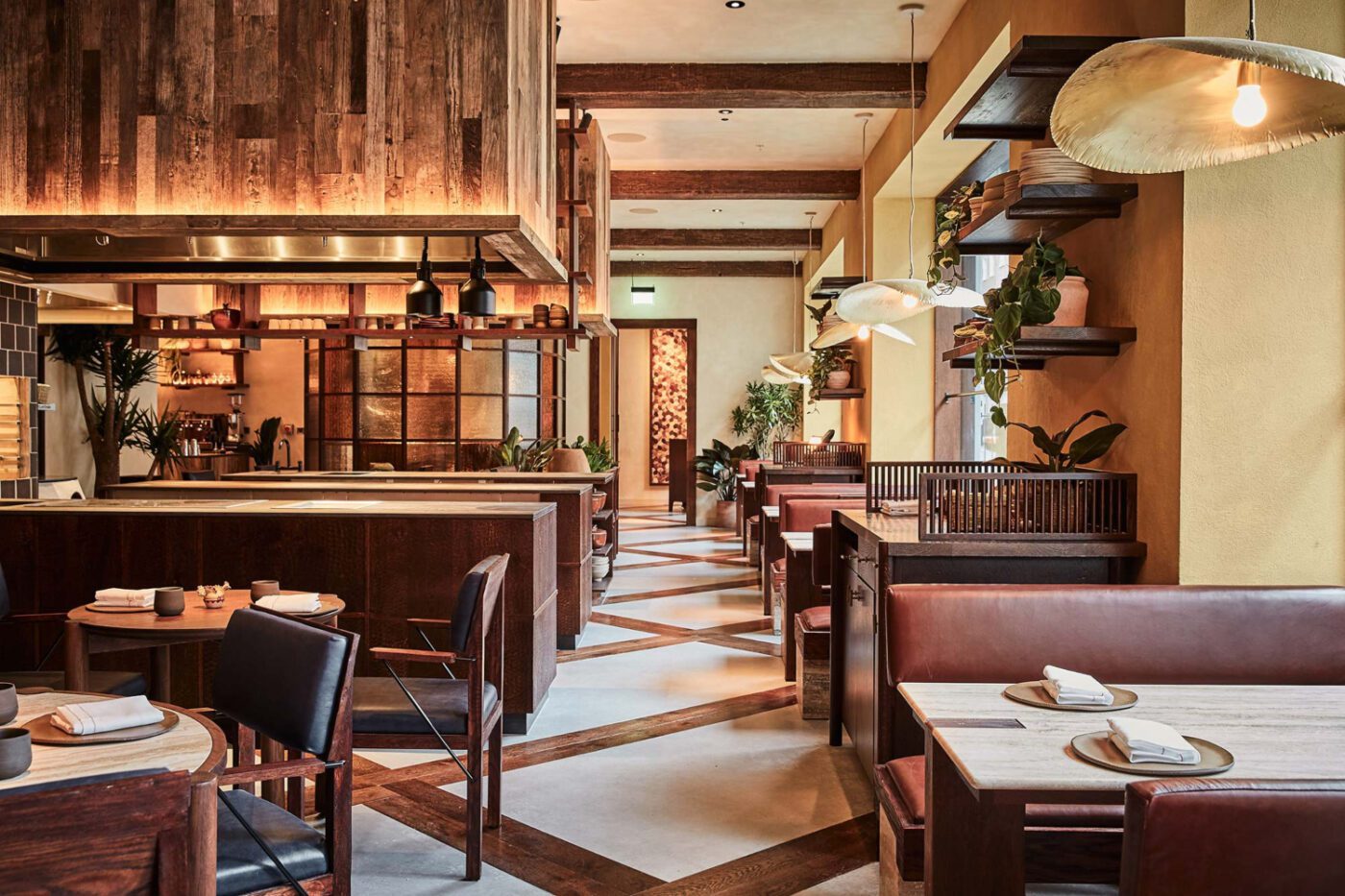
Interior Designer: A-nrd Studio
Design Concept & Inspiration
Kol is a celebration of Mexican craft through a contemporary British lens. The design focuses on “earthy minimalism”, using raw, tactile materials to echo the restaurant’s fire-cooked menu.
Key Materials, Colours & Textures
Terracotta floor tiles, hand-woven corn husks and raw concrete. The walls are finished in a soft ochre limewash, creating a warm, Mediterranean-meets-Mexican glow.
Furniture & Layout
Bespoke furniture in dark oak with wicker detailing. The layout is centred around an open kitchen that acts as the “hearth” of the home.
What Makes It Unique
The tactility. Every surface begs to be touched, demonstrating how a minimalist palette can still feel incredibly rich and warm.
10. Gymkhana – Mayfair
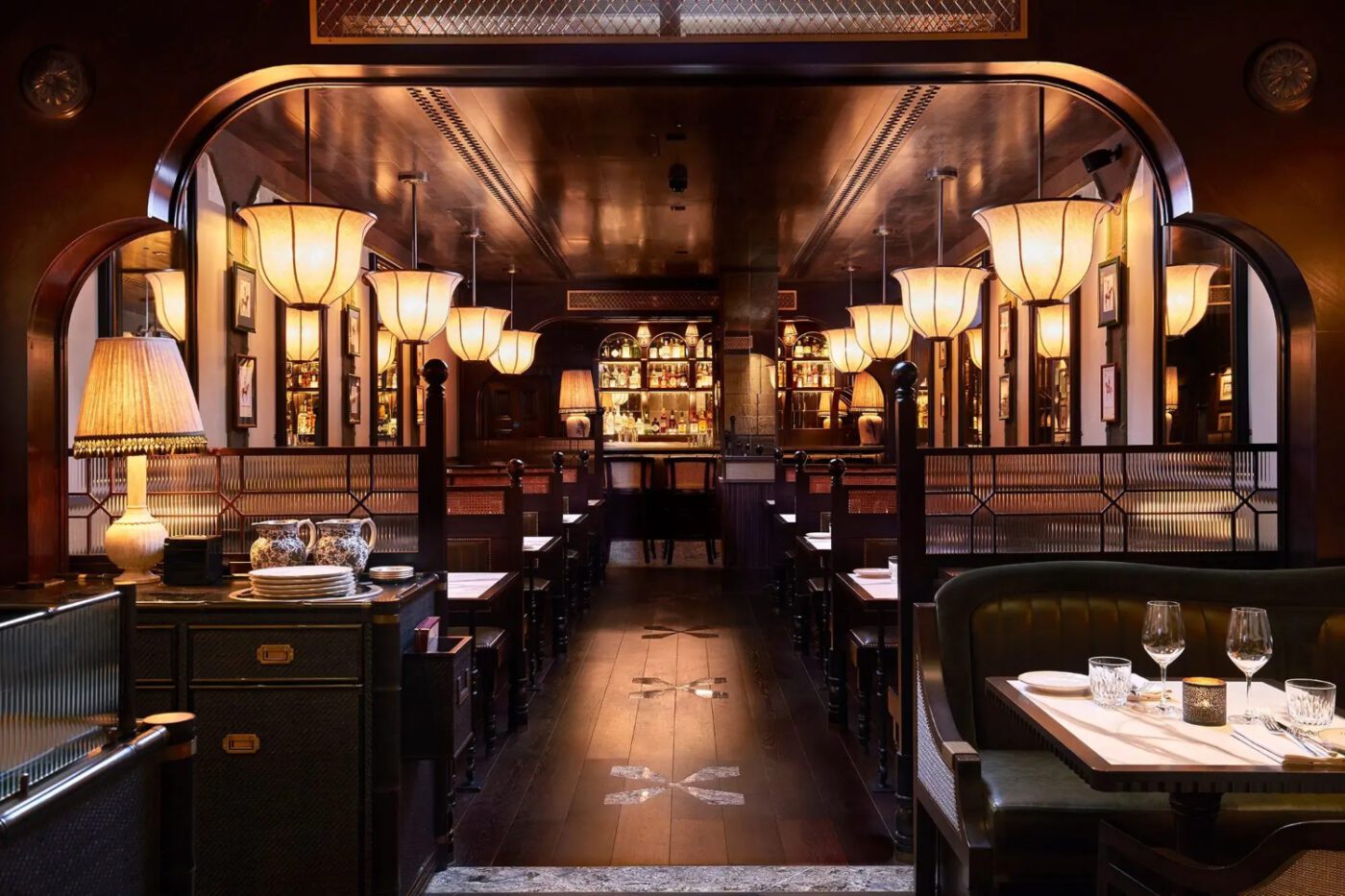
Interior Designer: JKS Restaurants
Design Concept & Inspiration
Inspired by the elite social clubs of Colonial India. The design of Gymkhana is a sophisticated mix of high-Victorian order and vibrant, layered cultural references.
Key Materials, Colours & Textures
Dark lacquered oak, polished brass and white marble. The walls are covered in “sepia” photographs and hunting trophies, balanced by the gleam of high-gloss finishes.
Furniture & Layout
Leather-upholstered booths and bentwood chairs. The layout is divided into distinct zones, using architectural millwork to create privacy and a sense of “clubby” exclusivity.
What Makes It Unique
The layering of narrative. It uses traditional materials in a way that feels contemporary, proving that heritage design doesn’t have to feel like a museum.
While the aesthetic brilliance of these ten restaurants is undeniable, their success is rooted in a fundamental truth of the hospitality industry: Design is a primary driver of ROI. In a competitive landscape like London, a restaurant’s interior is its most powerful marketing tool, its brand identity made physical and a critical component of its operational efficiency.
Are you working on a high-end hospitality project?
Whether you are an architect seeking specific material sourcing or a developer looking to refine your spatial narrative, our trade team can help you bridge the gap between inspiration and execution!
Featured image: Hide
YOU MAY ALSO LIKE: New Luxury Hotels 2026: Design-Forward Openings To Watch
We are working every day to bring you the most stylish ideas to fulfil your inspiration and to create the best interior design projects, so feel free to follow our Instagram Page and subscribe to our newsletter.