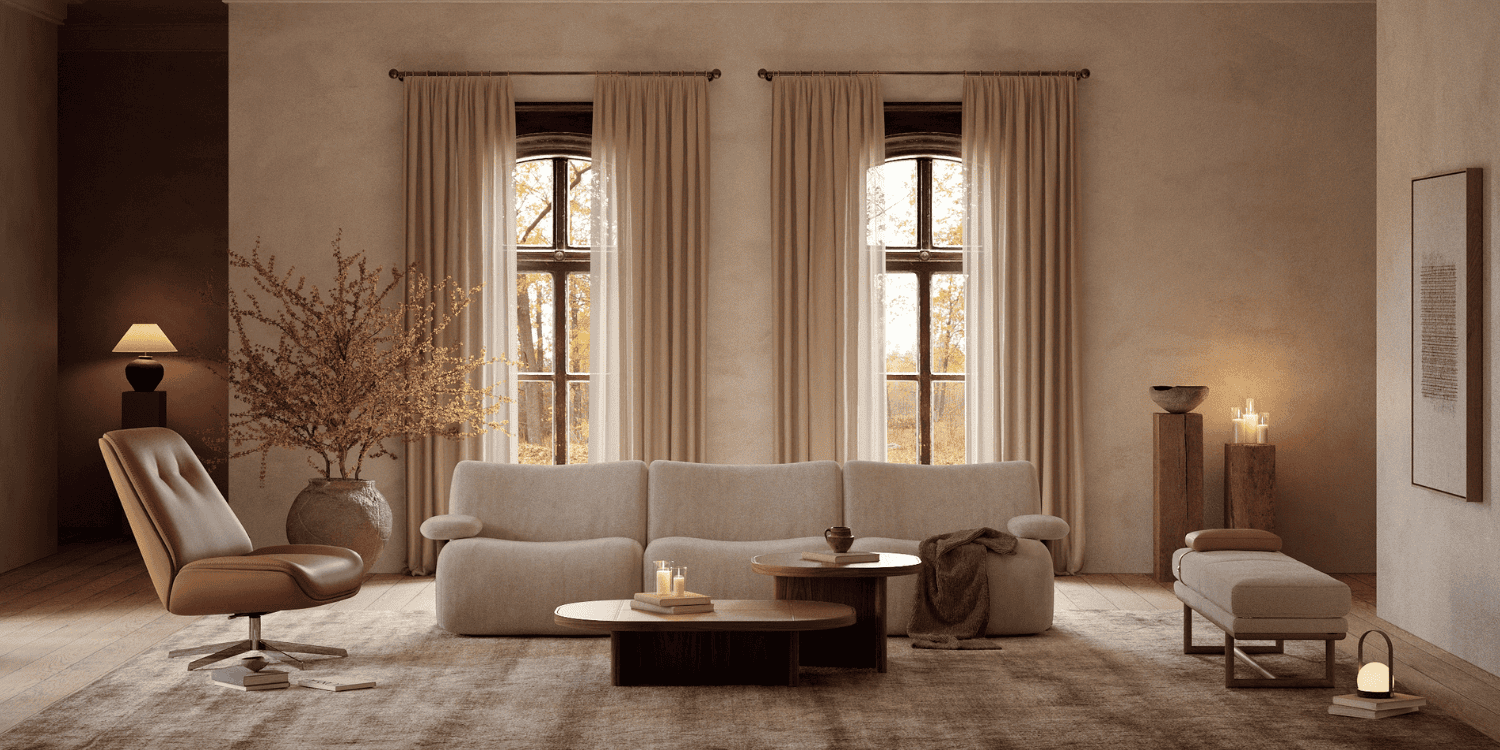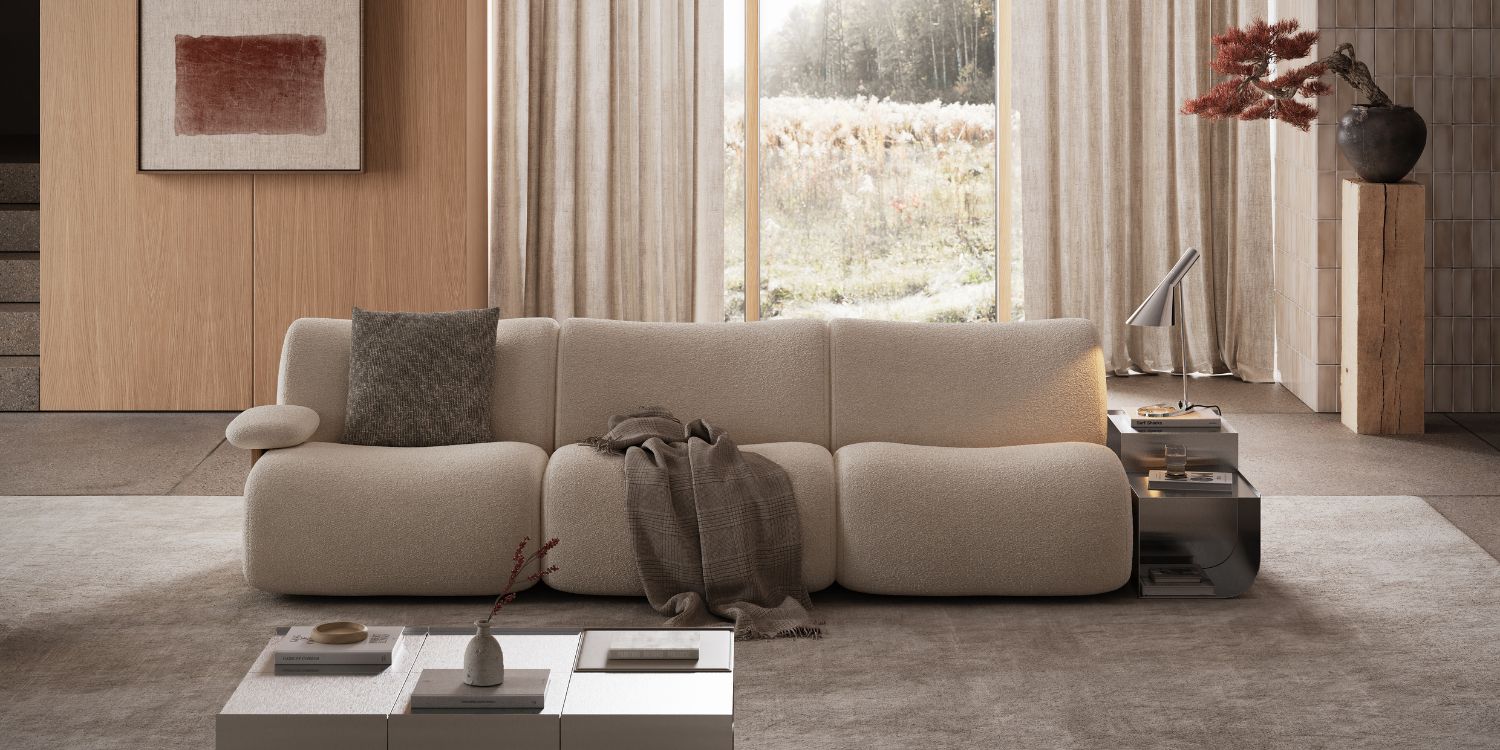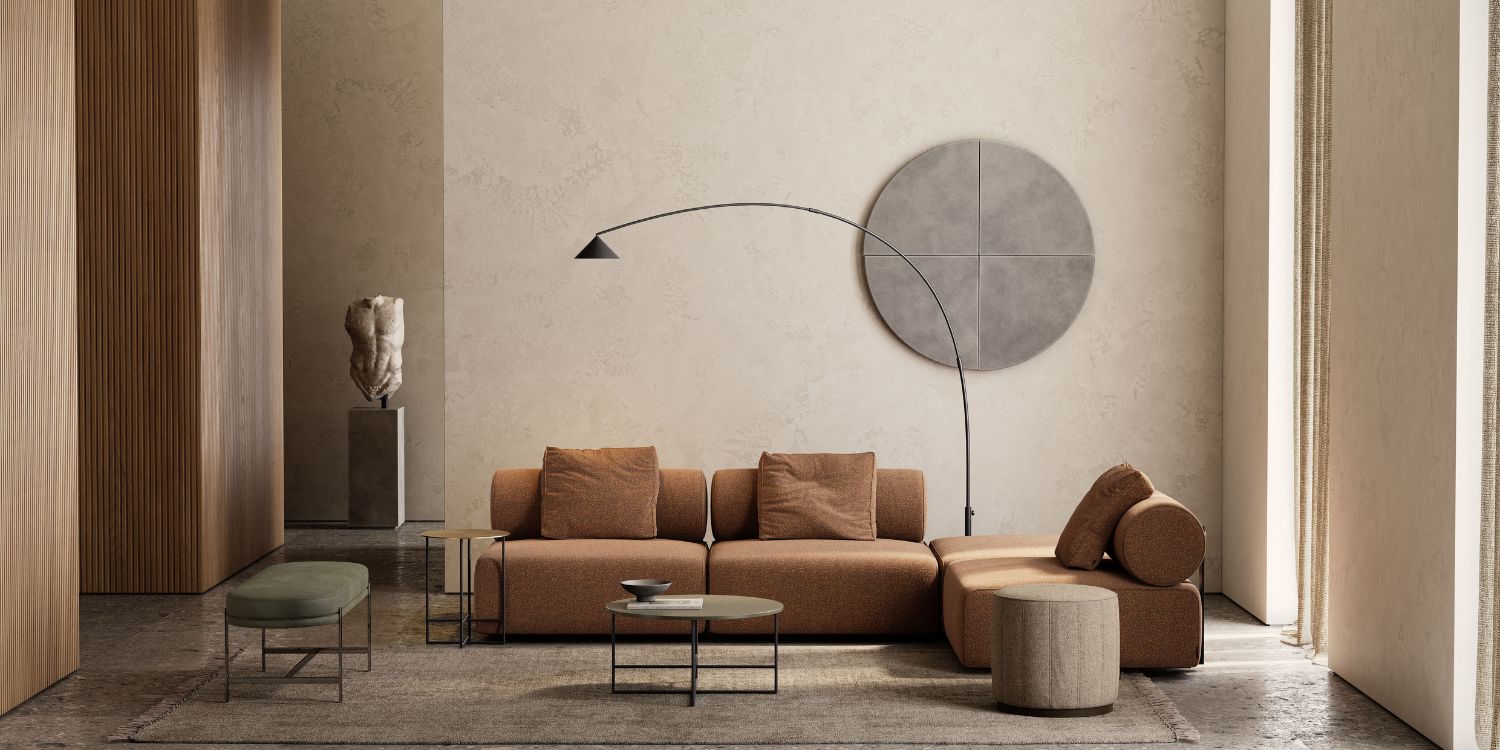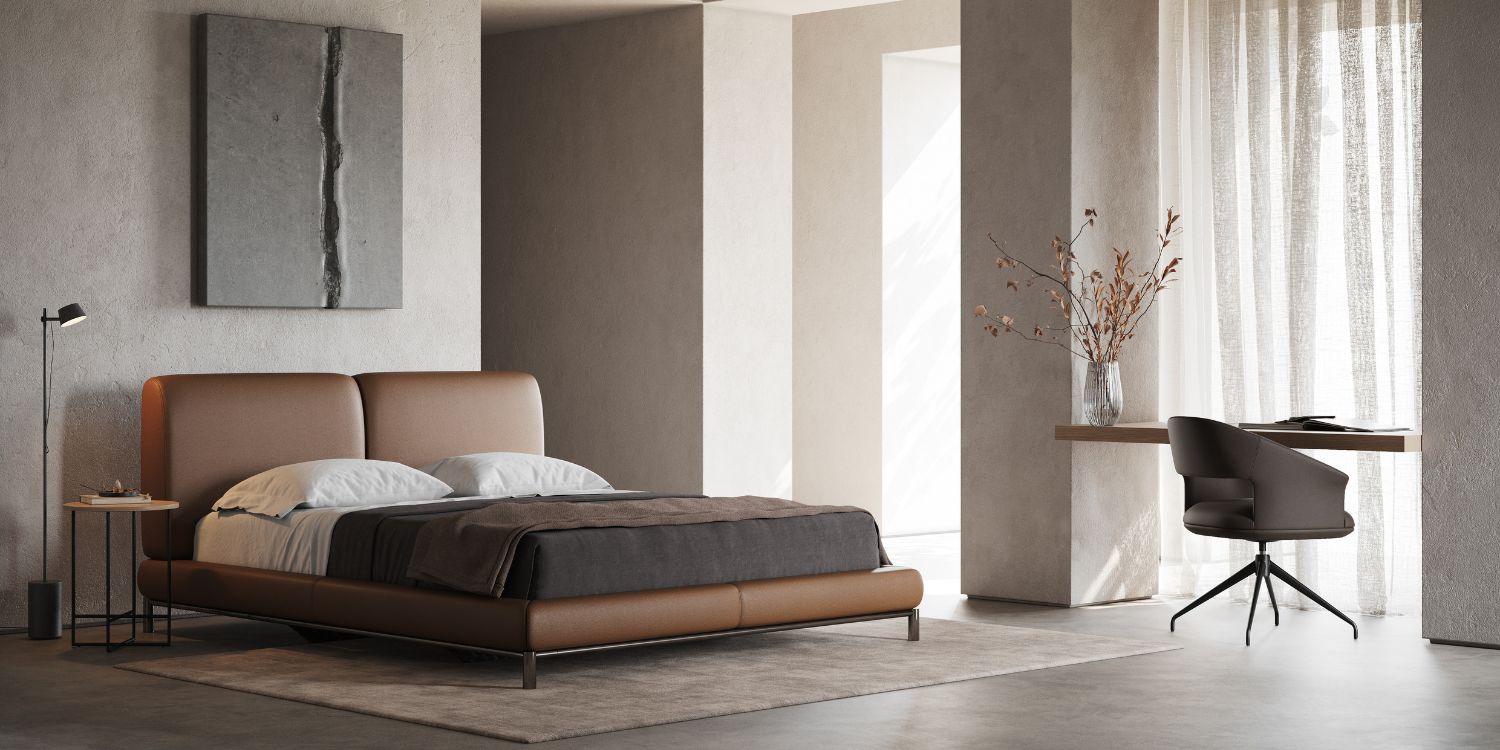


Outdoor living spaces are no longer an afterthought. Terraces, gardens, rooftops and hotel courtyards are now briefed and specified with the same rigour as any interior – sometimes more. Clients expect the sofa on the terrace to look as considered as the one in the living room.
But looking considered and performing well are two different problems. Outdoor upholstery lives inside a system of forces indoor furniture never has to negotiate: sun, rain, humidity, salt, pollution, temperature swings, biological growth. A fabric or frame that’s proven itself for a decade indoors can fail within a single season outside.
This guide walks through the reasoning behind outdoor furniture specification – not just what to choose, but why the outdoor context changes the rules.
Why Outdoor Furniture Is More Than Indoor Furniture Outside
The instinct to treat outdoor furniture as “the same piece, just hardier” is where most specification problems start. Outdoor upholstery isn’t a styled version of an indoor product – it’s an engineered response to a set of environmental variables that compound over time:
- UV radiation breaks down dye molecules and fibre structure, causing fading and fabric weakening long before a piece looks “old”;
- Rain and standing water saturate cushions and, without a way out, keep them wet for days, encouraging rot, odour and mildew;
- Humidity slows drying time even between rain events, extending every risk moisture creates;
- Temperature fluctuation makes materials expand and contract, which over years loosens joints and cracks finishes never designed to move;
- Salt air, common in coastal projects, accelerates corrosion in metals and degrades finishes faster than inland conditions;
- Pollution, particularly on urban rooftops, deposits particulates that abrade fabric surfaces and dull colour;
- Biological growth – mould and mildew – thrives wherever moisture is trapped against organic material, whether a cushion core or an untreated timber joint.
None of these forces act alone. A frame that resists corrosion but sits on cushions with poor drainage will still fail, because the moisture problem was never solved. That’s why outdoor specification has to be approached as a system – fabric, frame, foam and construction working together – rather than a checklist of individually “outdoor-rated” parts.
Indoor vs. Outdoor Upholstery: Key Specification Differences
Specification factor |
Indoor upholstery |
Outdoor upholstery |
|---|---|---|
| Primary threat | Wear, staining, light UV exposure | UV radiation, rain, humidity, salt, biological growth |
| Fabric priority | Hand-feel, colour, pattern | Colourfastness, water repellence, breathability |
| Foam type | Standard density foam | Quick-dry, open-cell foam with drainage channels |
| Frame concern | Aesthetic finish, structural load | Corrosion resistance, UV stability, moisture behaviour |
| Maintenance expectation | Occasional cleaning | Seasonal, ongoing, climate-dependent care |
| Design lifespan variable | Mostly usage-driven | Usage and environmental exposure |
| Covered vs. uncovered | Not a factor | Reduces but doesn’t eliminate risk |
The Biggest Indoor Assumptions That Don’t Work Outdoors
Most specification mistakes trace back to a handful of assumptions that hold true indoors and quietly stop being true the moment furniture moves outside.
“If it’s under a roof, it’s protected.” A covered terrace blocks direct rain but not humidity, temperature swings, airborne salt or UV bouncing off paving and water. Furniture under a pergola still needs outdoor-grade materials – perhaps a lighter specification than a fully exposed poolside piece, but not an indoor one.
“Any durable fabric will do.” Durability indoors is measured in abrasion cycles. Outdoors, a fabric also has to survive UV without fading, resist water absorption and dry fast enough that mildew never gets a foothold. A fabric can be hard-wearing and still be the wrong choice for a terrace.
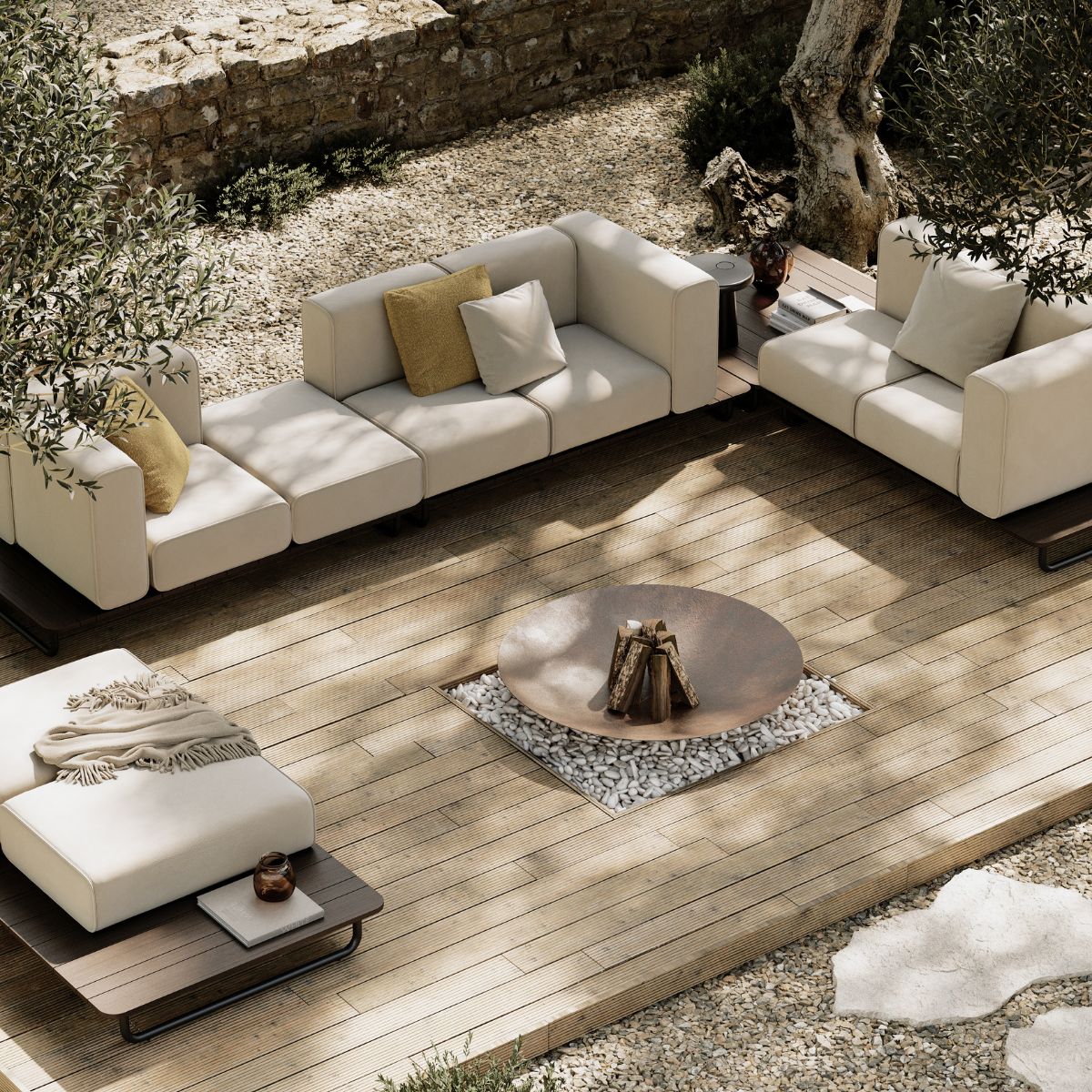
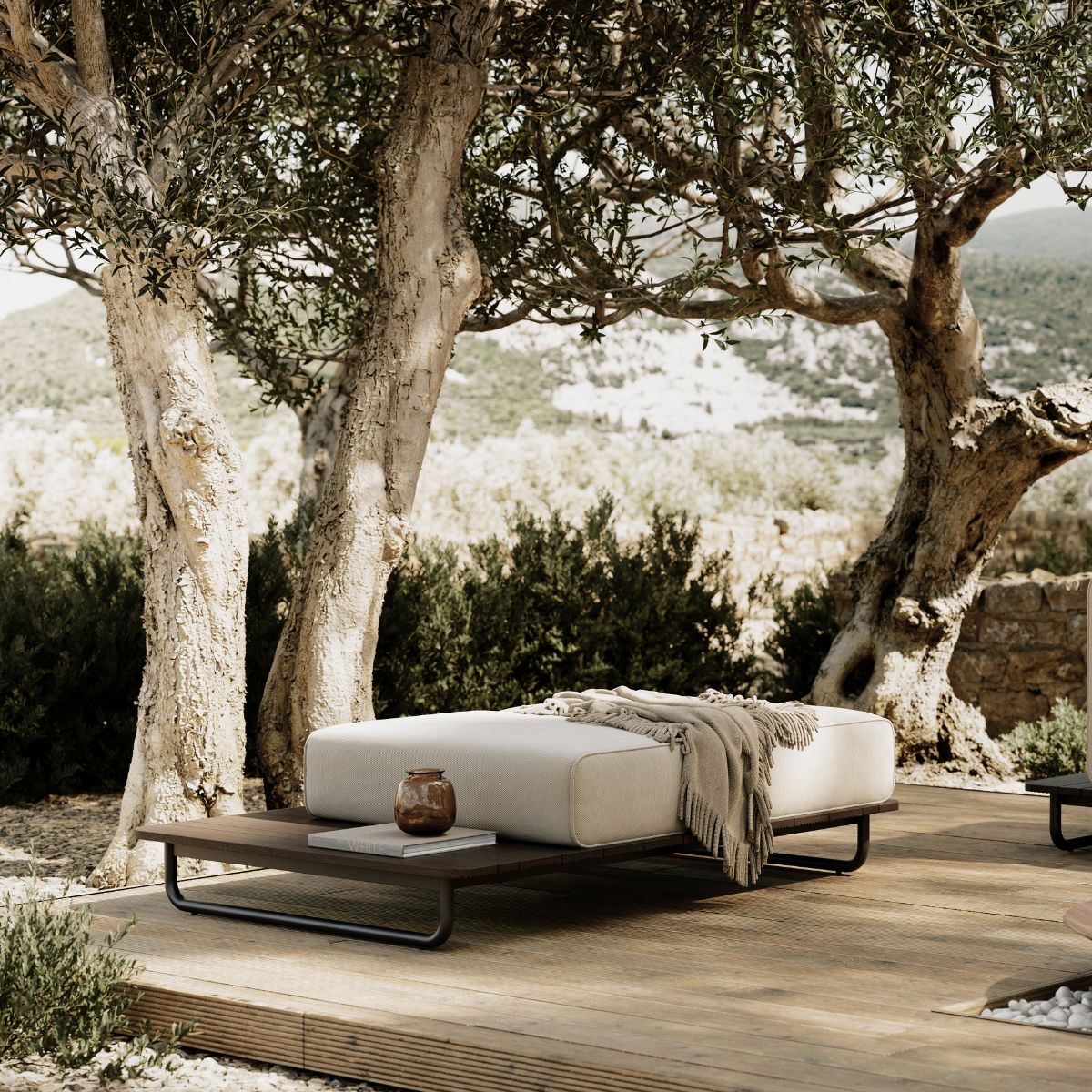
“Solid wood behaves the same indoors and outdoors.” Timber that’s stable in a climate-controlled interior will move, check or grey outdoors unless it’s a naturally weather-resistant species – like teak – or specifically treated for exterior use. Indoor joinery doesn’t always account for that movement.
“Outdoor cushions don’t need drainage.” A cushion that looks identical to an indoor one but lacks internal drainage will hold water inside its foam after every rain shower, staying damp for days regardless of how weather-resistant its cover fabric is.
“Maintenance is optional.” No outdoor fabric or frame is maintenance-free. Skipping it doesn’t just shorten a product’s lifespan gradually – it can accelerate failure sharply, because moisture and UV damage compound rather than progress in a straight line.
Choosing the Right Outdoor Fabrics
Outdoor fabric selection should start from performance criteria, with aesthetics applied as a filter afterwards rather than the first decision.
- UV resistance determines how long a colour holds – fading is often the first visible sign of failure, well before a fabric physically wears out.
- Colourfastness is related but distinct: a dye’s ability to resist bleeding or shifting under sun, moisture and cleaning.
- Water repellence slows saturation, giving rain a chance to run off before it soaks in and buying time for drainage to do its job.
- Breathability lets trapped moisture vapour escape rather than condense inside the cushion, which helps keep mildew from establishing.
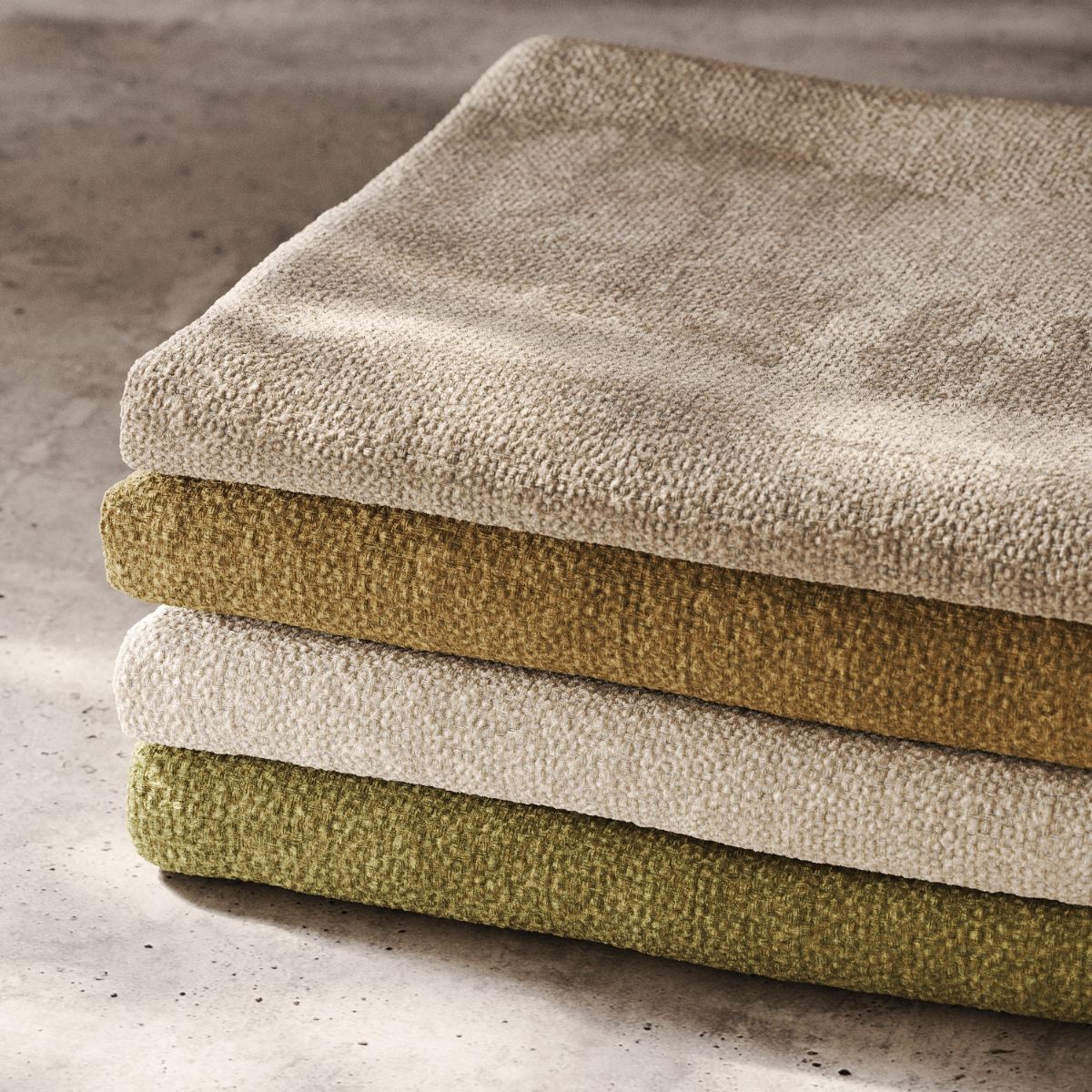
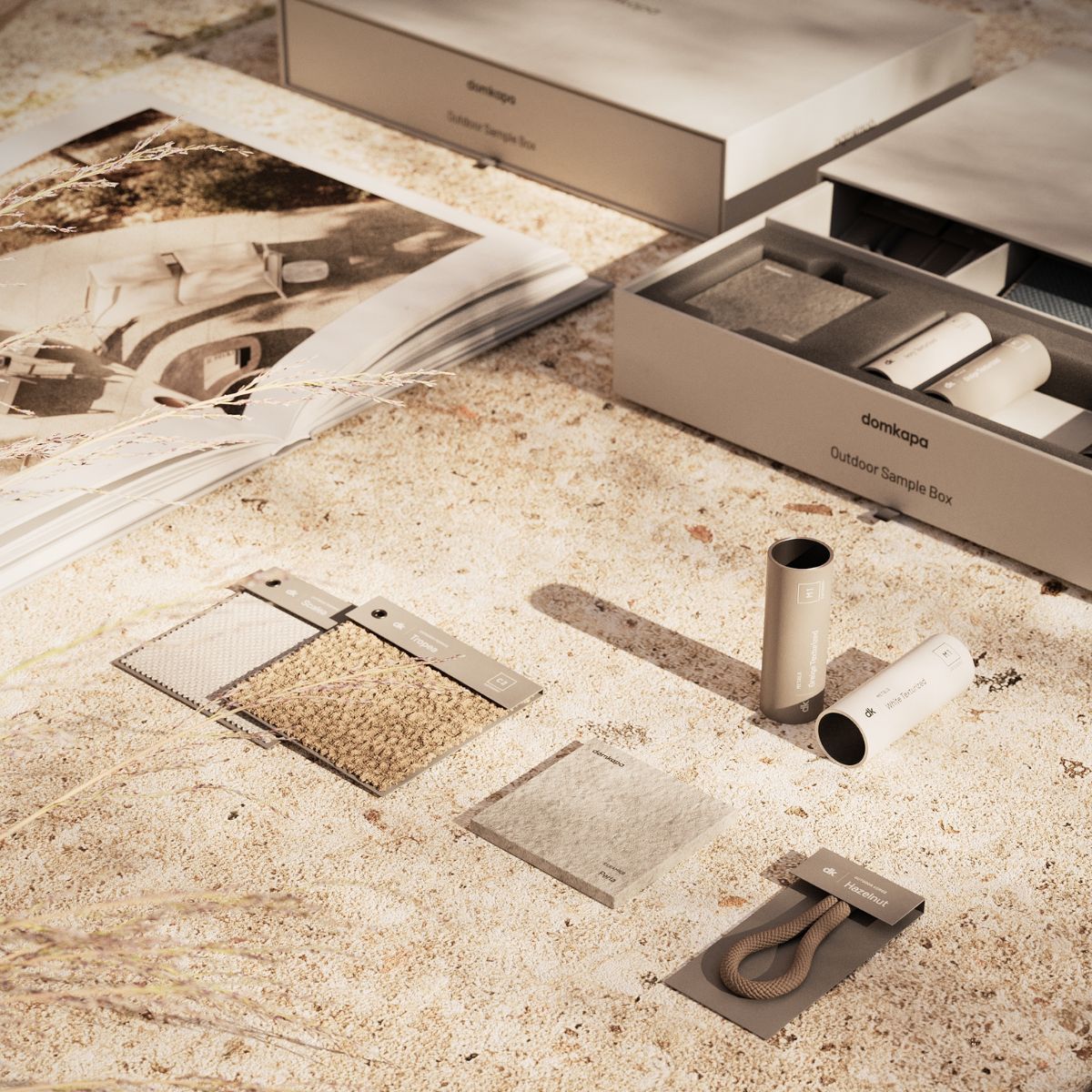
- Resistance to mould and mildew, usually achieved through fibre treatment, matters because biological growth will exploit any fabric that stays damp long enough.
- Abrasion performance still matters, but even when combined with the above, a fabric that resists wear but retains moisture will still develop odour and staining.
- Ease of cleaning affects how realistic ongoing maintenance is for the client; a fabric needing specialist products is a maintenance commitment, not a footnote.
Worth being direct with clients here: no outdoor fabric is maintenance-free. Performance fabrics dramatically reduce risk and extend lifespan, but they still benefit from periodic cleaning, and even the best UV-resistant dyes will fade gradually over years of direct sun exposure.
Frame Materials Matter More Than You Think
The frame is structural, but outdoors it’s also the component most exposed to corrosion, UV degradation and moisture cycling – which makes material choice a durability decision, not just an aesthetic one.
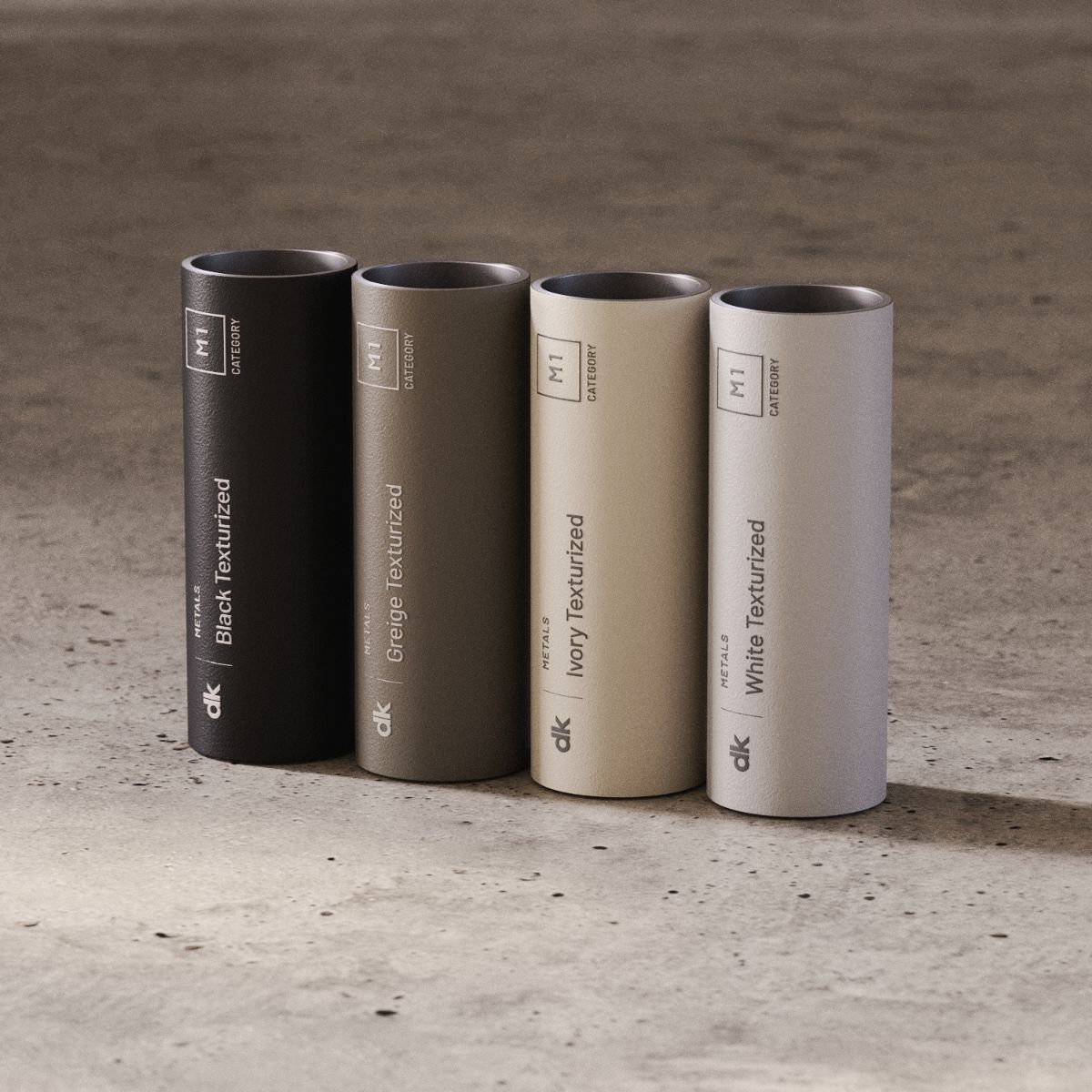
- Powder-coated aluminium resists corrosion and stays lightweight, making it a strong choice for rooftops and coastal projects, though the coating can chip and expose the metal beneath if handled roughly.
- Stainless steel offers excellent structural strength and a refined look, but grade matters enormously – marine grade is necessary near salt air, since standard grades will still corrode there.
- Solid teak is naturally rich in oils that resist water and pests, which is why it’s remained a benchmark outdoor timber for generations; left untreated, it weathers to a silver-grey patina, best presented to clients as intended, not a defect.
- Outdoor-treated hardwoods can approximate teak’s performance at a different price point, but the treatment is doing the protective work, so its quality and reapplication schedule determine longevity.
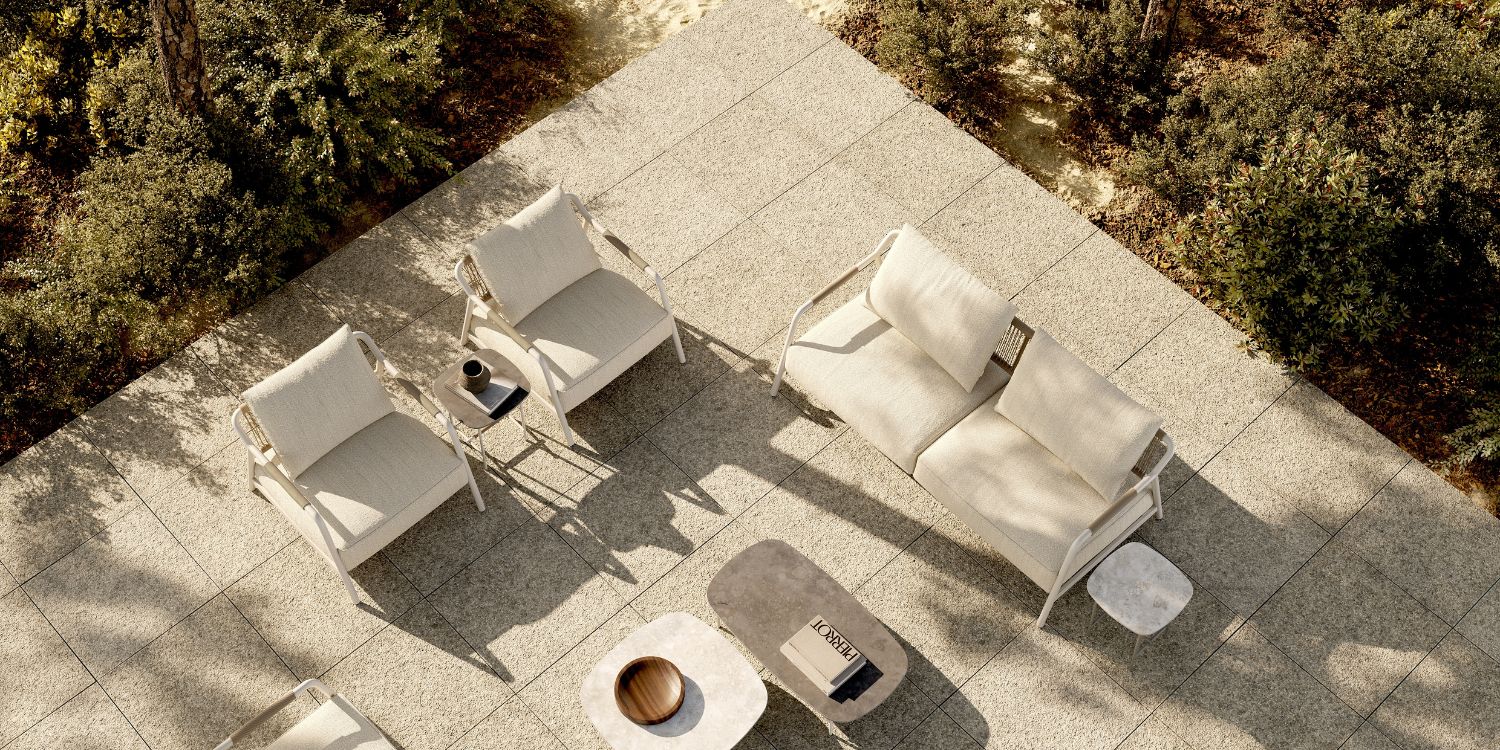
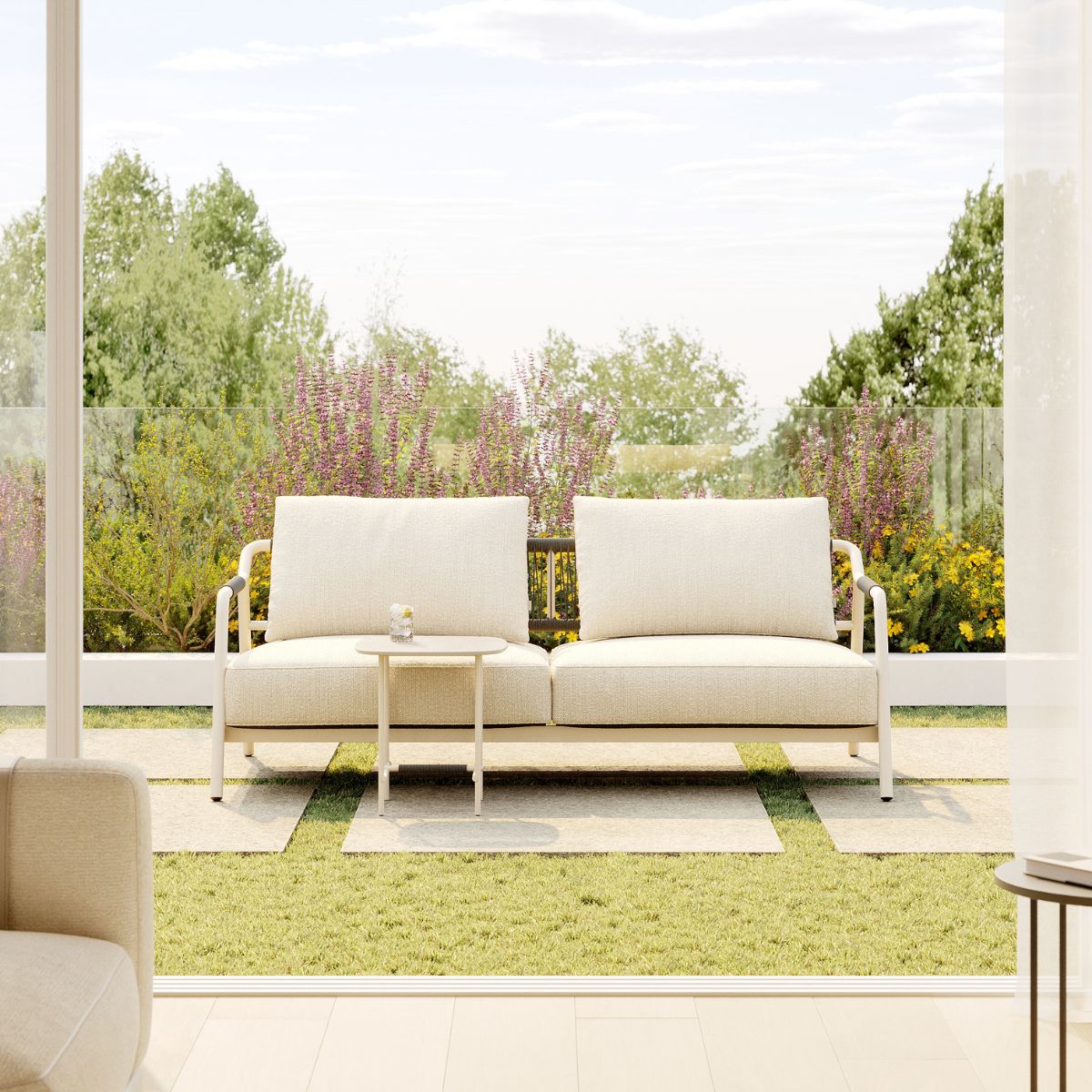
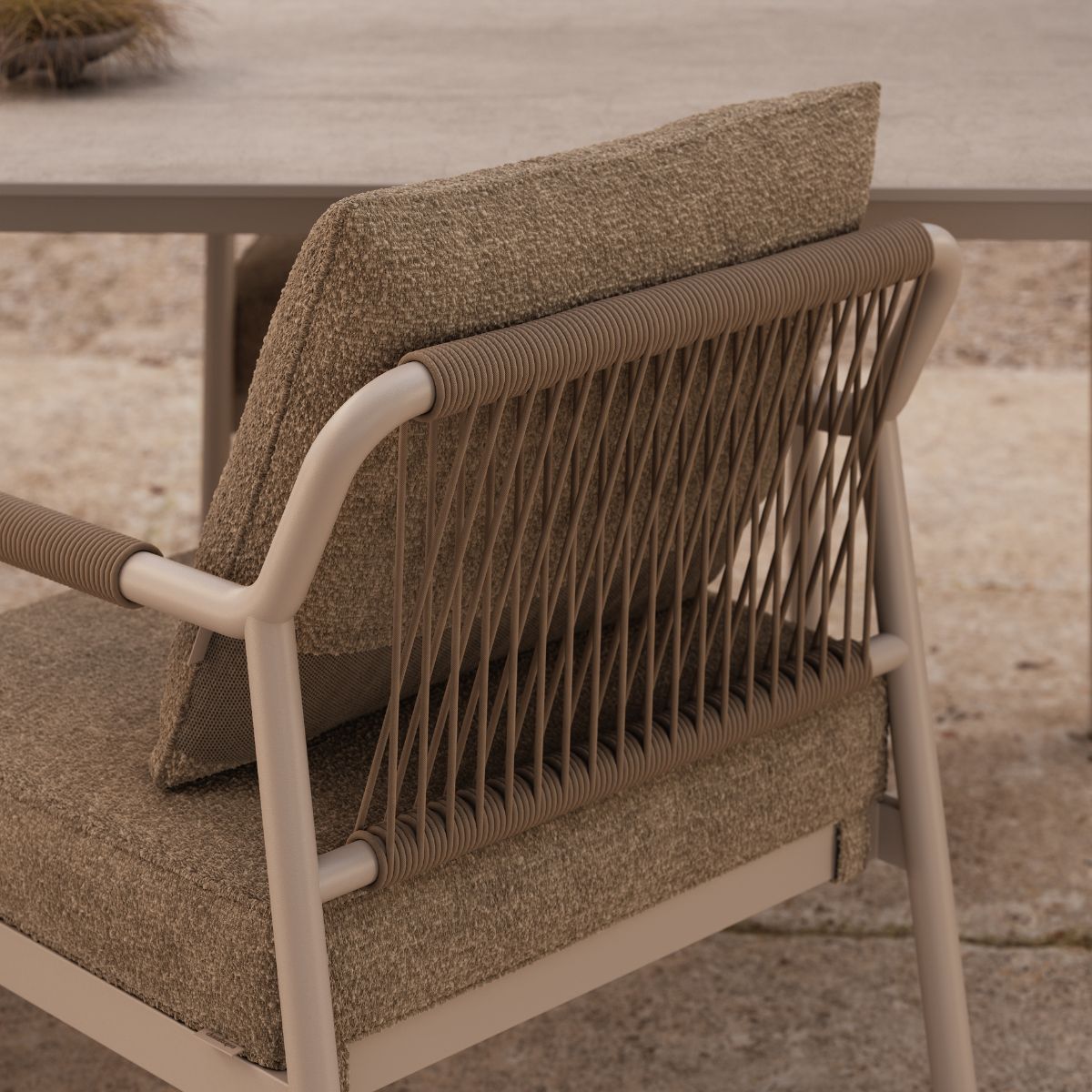
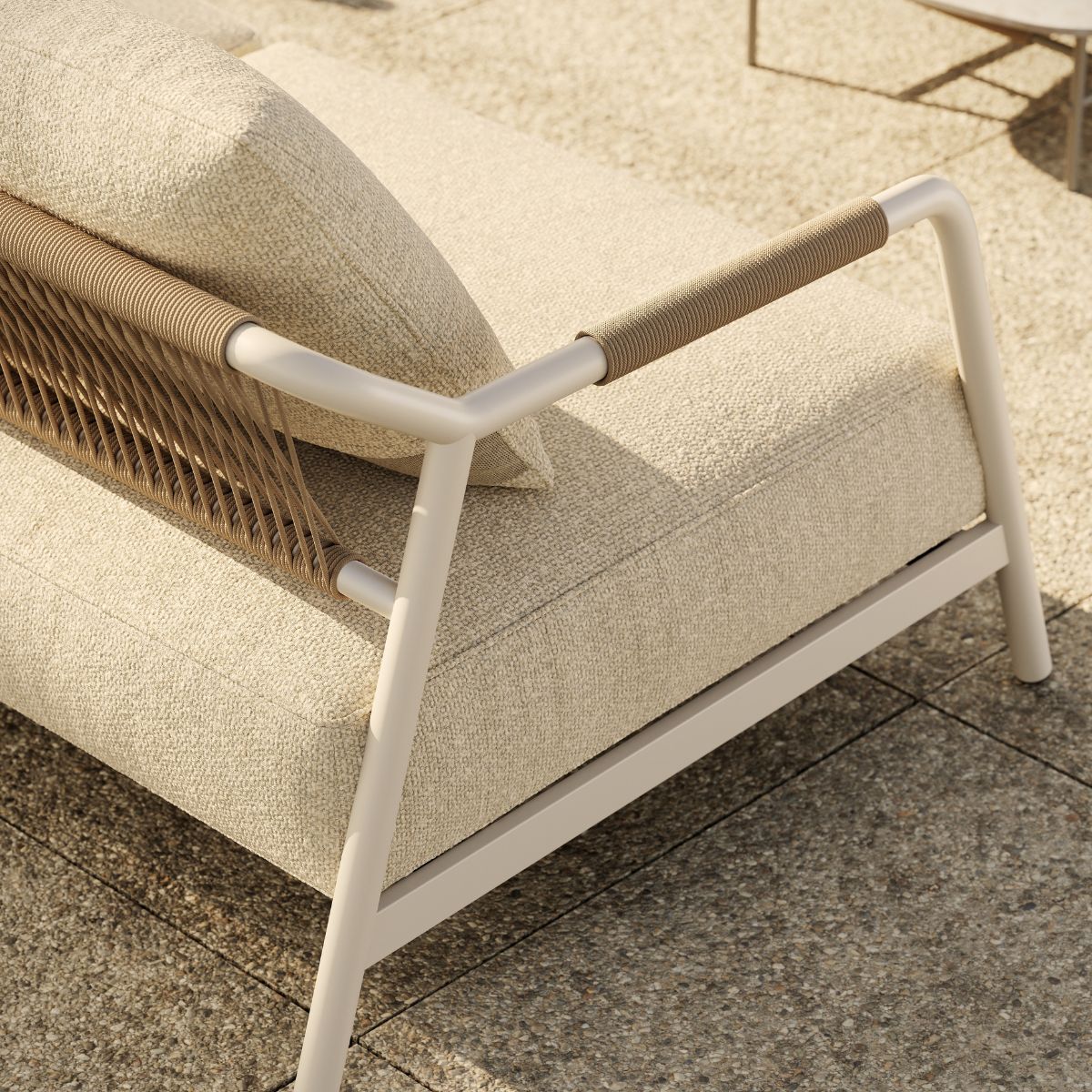
- Synthetic rope, used in handwoven detailing, resists UV and moisture far better than natural fibre rope while still delivering the tactile, handcrafted quality designers look for – Domkapa’s Neroli Sofa and Neroli Dining Chair use this kind of ropework for that reason, pairing weather resistance with a warmth pure metal or stone can’t offer.
- High-performance composites mimic the look of timber with minimal maintenance and strong moisture resistance, useful where a natural aesthetic is wanted without timber’s upkeep.
Choosing the Right Outdoor Material for the Right Environment
Material |
Best suited to |
Maintenance level |
Watch out for |
|---|---|---|---|
| Powder-coated aluminium | Rooftops, urban terraces, hospitality | Low | Chipped coating exposing bare metal |
| Marine-grade stainless steel | Coastal and poolside projects | Low–Medium | Confirming true marine grade, not standard steel |
| Solid teak | High-end residential, hospitality | Medium | Client expectations around greying patina |
| Outdoor-treated hardwood | Residential terraces, gardens | Medium–High | Consistency of treatment and reapplication schedule |
| Synthetic rope detailing | Coastal, poolside, residential | Low | Distinguishing from lower-grade synthetic fibres |
| High-performance composite | Contemporary residential, commercial | Low | Matching visual warmth to the design brief |
The Pontus Outdoor Dining Table and pieces from the Salema Table Collection illustrate this thinking well: minimalist proportions paired with surfaces chosen specifically for exterior durability, rather than an indoor silhouette adapted after the fact. The same logic runs through the Bondi and Copacabana ranges, where different material combinations suit different exposure levels – a reminder that outdoor material choice responds to context, not a single default answer.
Why Drainage Is One of the Most Important Features
Drainage is easy to overlook because it’s invisible in a rendering – but it’s often the single biggest determinant of how long an outdoor cushion actually lasts.
Quick-dry foam is manufactured with a more open cellular structure so water passes through rather than being absorbed and held. Open-cell foam technology takes this further, creating interconnected air pockets that move water through the cushion instead of letting it pool. Neither works alone, though – the cover and casing need drainage channels that give water somewhere to go and the piece as a whole needs a path for water evacuation, whether gaps in a seat base or a sloped frame.
Cushion construction ties this together: a well-built outdoor cushion sheds water from its cover, moves it through open-cell foam and evacuates it through the frame, rather than relying on one layer to solve the problem alone. Specify any one element without the others and water gets trapped one layer further in – often why a “weather-resistant fabric” cushion still smells musty after a rainy week.
Understanding Exposure Levels
Not every outdoor space carries the same risk profile and specification should scale accordingly:
- Fully exposed outdoor spaces – open gardens, unshaded terraces – need the highest specification across fabric, frame and drainage since there’s no buffer against sun or rain.
- Covered terraces reduce direct rain and UV but not humidity or temperature swings, so materials still need to be outdoor-rated, potentially at a lighter tier.
- Coastal environments add salt air, which accelerates corrosion and demands marine-grade metals and UV-stable fabrics tested for that context.
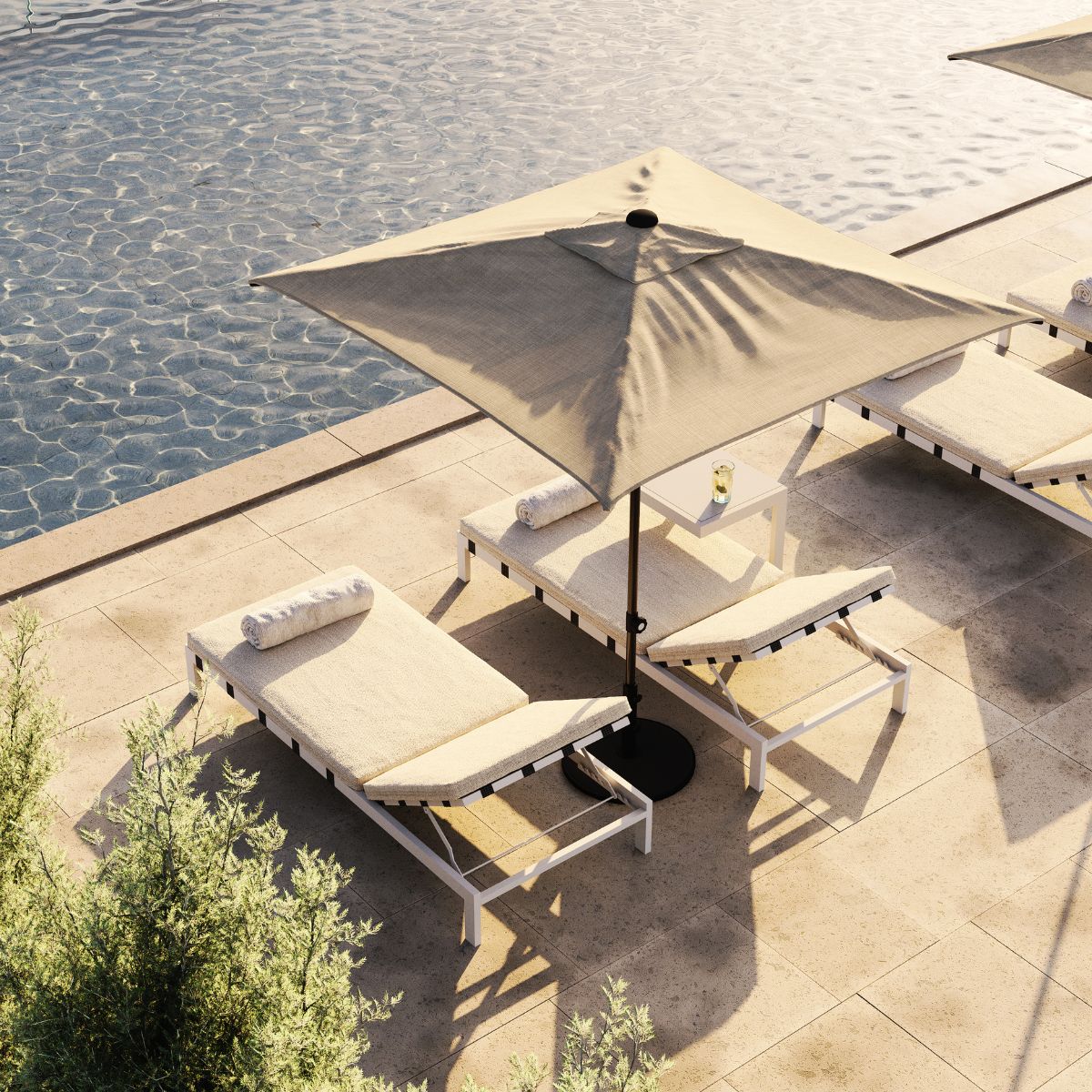
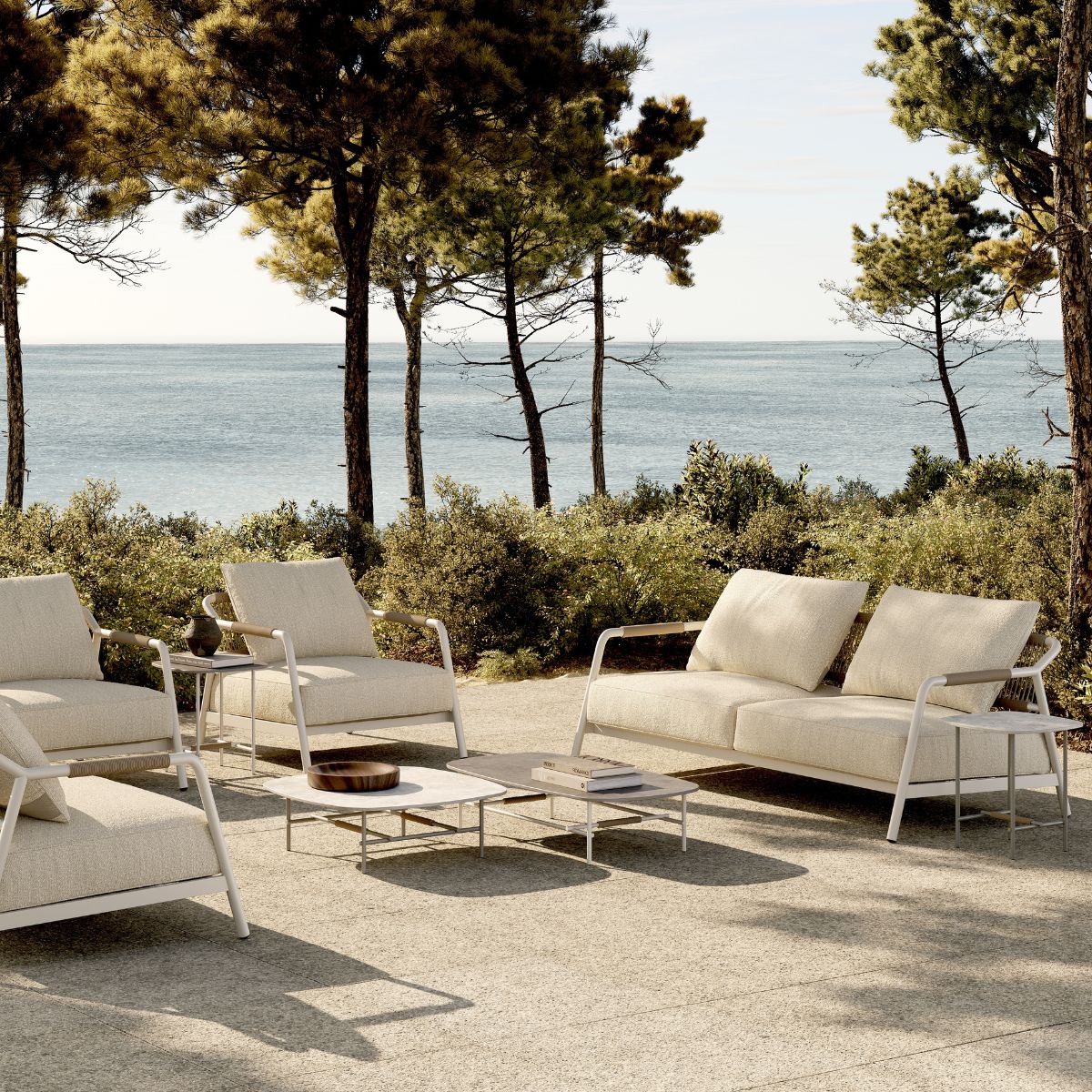
- Rooftop installations combine intense sun with wind loading and often less routine maintenance access, favouring lightweight, low-upkeep materials like powder-coated aluminium.
- Poolside areas introduce chlorine or salt-water splash alongside standard exposure, narrowing fabric and finish options further.
- Hospitality projects face heavier daily use and less forgiving maintenance schedules than residential settings, so specification must account for higher abrasion cycles alongside environmental exposure.
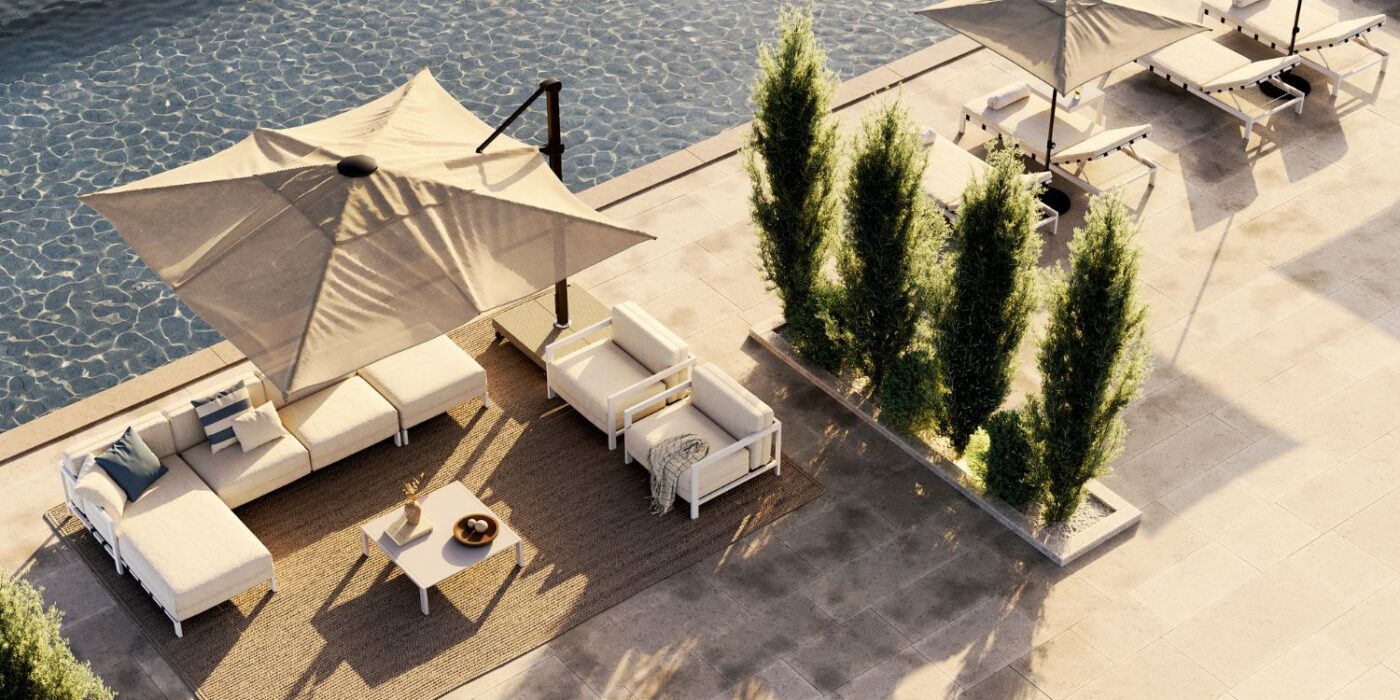
Great outdoor design isn’t achieved by making furniture look beautiful in a rendering – it comes from understanding how fabrics, frames and construction behave over years of real exposure and specifying accordingly.
The rules that guide indoor upholstery don’t disappear outdoors; they’re replaced by a different set, built around UV, moisture, drainage and material honesty. Designers who understand that distinction are the ones whose outdoor projects age well and whose clients don’t call back with complaints!
YOU MAY ALSO LIKE: Outdoor Furniture Care Guide: Keep Your Projects Looking Fresh
We are working every day to bring you the most stylish ideas to fulfil your inspiration and to create the best interior design projects, so feel free to follow our Instagram Page and subscribe to our newsletter.