

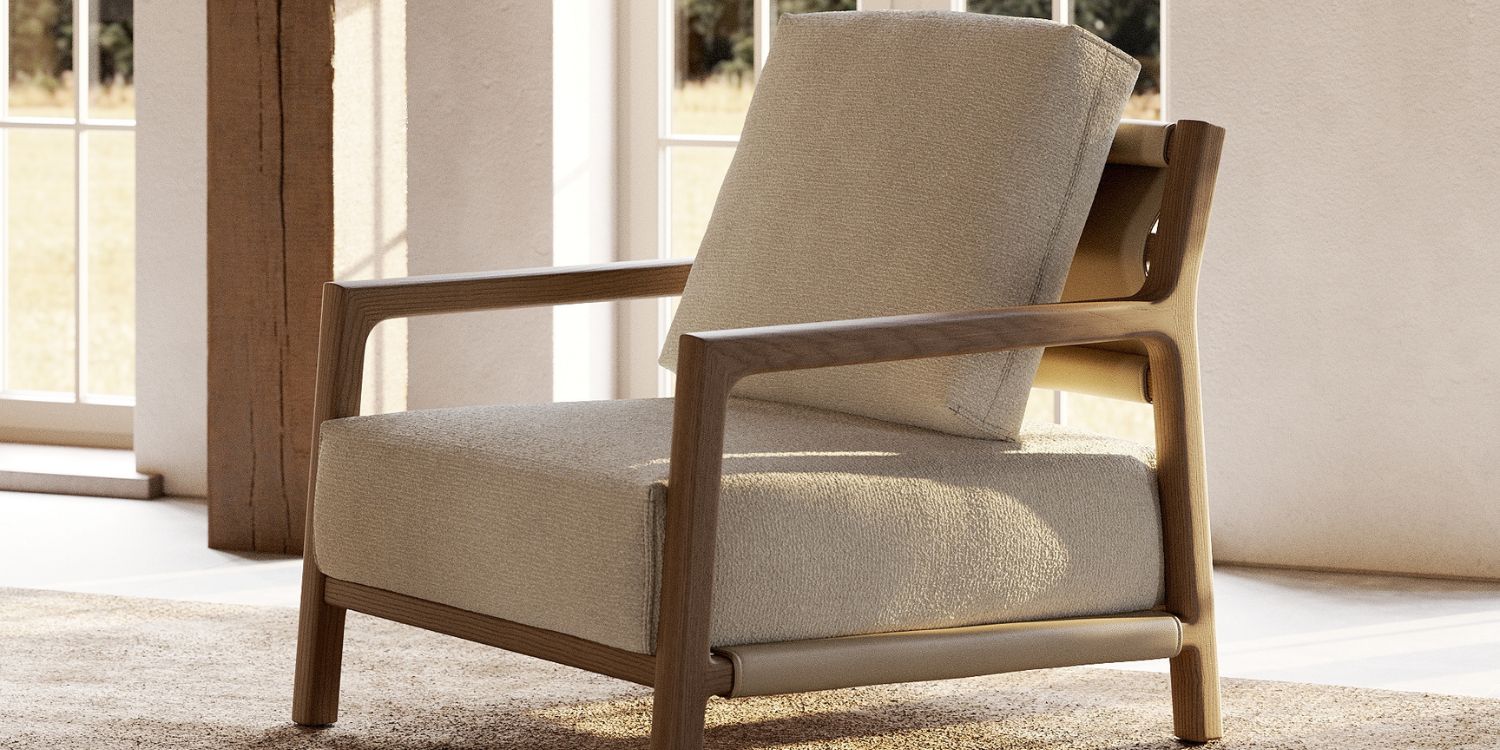
Most designers have experienced it at least once.
The armchair looked perfect in the showroom. The fabric was beautiful, the silhouette aligned with the design concept and the client loved it. Yet once installed, something felt wrong. The chair dominated the room, blocked circulation or made the sofa look undersized. The space suddenly felt unbalanced, even if no one could immediately explain why.
When selecting occasional seating, style often receives the most attention. Scale, however, is what ultimately determines whether a room feels harmonious or uncomfortable.
A beautifully designed armchair in the wrong proportion can undermine an otherwise exceptional project. Conversely, a well-scaled piece can anchor a room, enhance comfort and strengthen the overall composition.
Understanding furniture scale and proportion is therefore one of the most valuable skills in residential interior design. Whether specifying a generous armchair or a compact accent chair, the goal is not to choose the biggest statement piece – it is to choose the most appropriate one.
Why Scale Mistakes Are So Common
Scale-related mistakes rarely happen because designers lack technical knowledge. More often, they occur because aesthetics naturally draw our attention first.
Product photography can be particularly misleading. Without surrounding context, even experienced professionals can underestimate or overestimate an armchair’s actual presence.
Clients also tend to focus on appearance rather than proportion. They may fall in love with an armchair’s shape, fabric or detailing without considering how it relates to the room.
The result?
- Oversized seating that overwhelms compact interiors;
- Small accent chairs that disappear in large spaces;
- Furniture arrangements that feel disconnected;
- Reduced circulation and functionality;
- Rooms that feel visually “off” despite having beautiful pieces.
Scale influences more than appearance. It affects comfort, movement, visual balance and even how large or small a room feels.
An armchair that is technically the correct size can still appear disproportionate if its visual weight is not aligned with its surroundings.
This is why successful interior design furniture planning goes beyond dimensions alone.
Armchair vs Accent Chair: What’s the Difference?
Before discussing proportion, it helps to clarify the distinction between these two categories.
Armchair
An armchair typically offers:
- A larger footprint;
- Greater comfort for extended use;
- Strong visual presence;
- A role as primary or semi-primary seating.
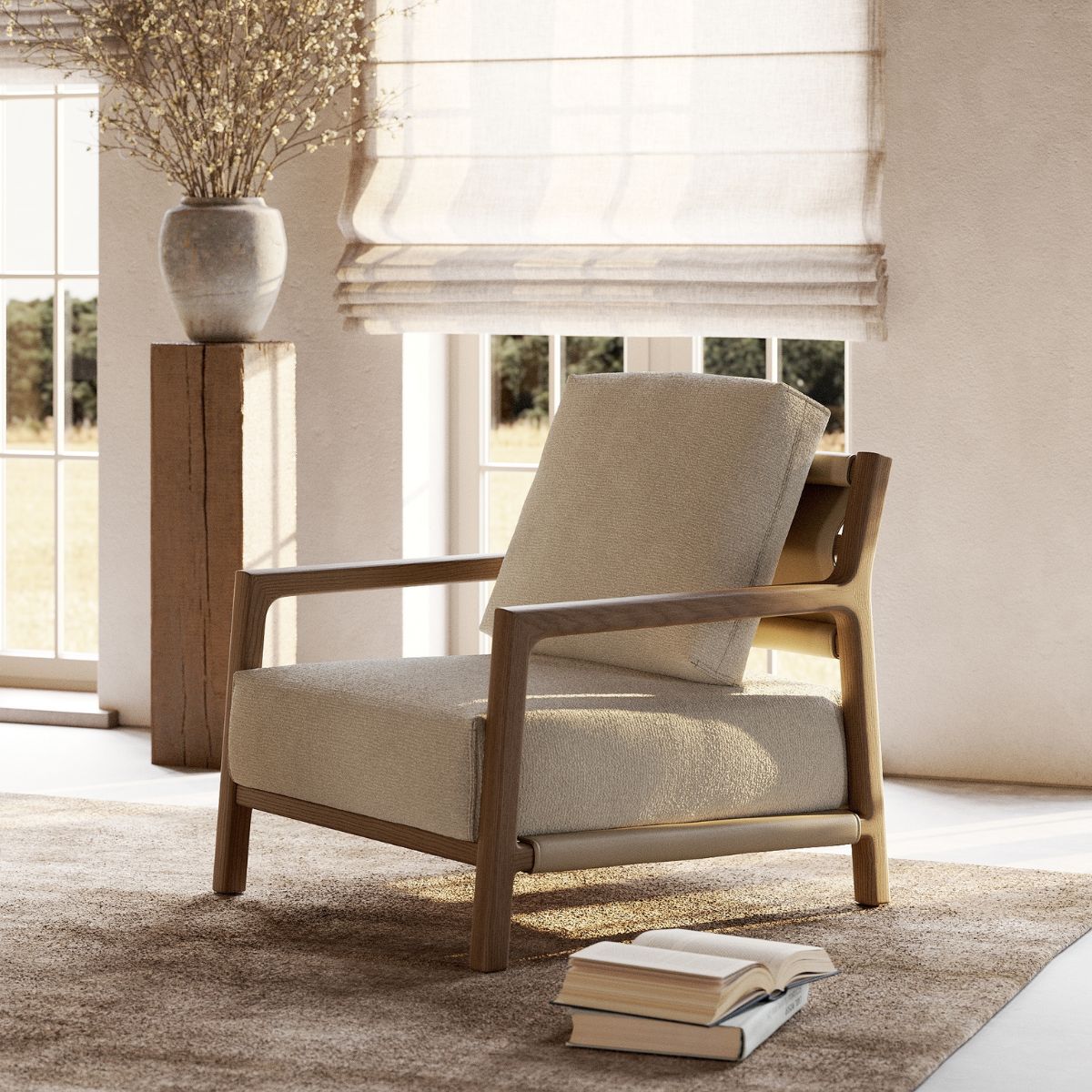
Armchairs often become focal points within a living room seating layout. They are designed for relaxation and frequently support activities such as reading, conversation or lounging.
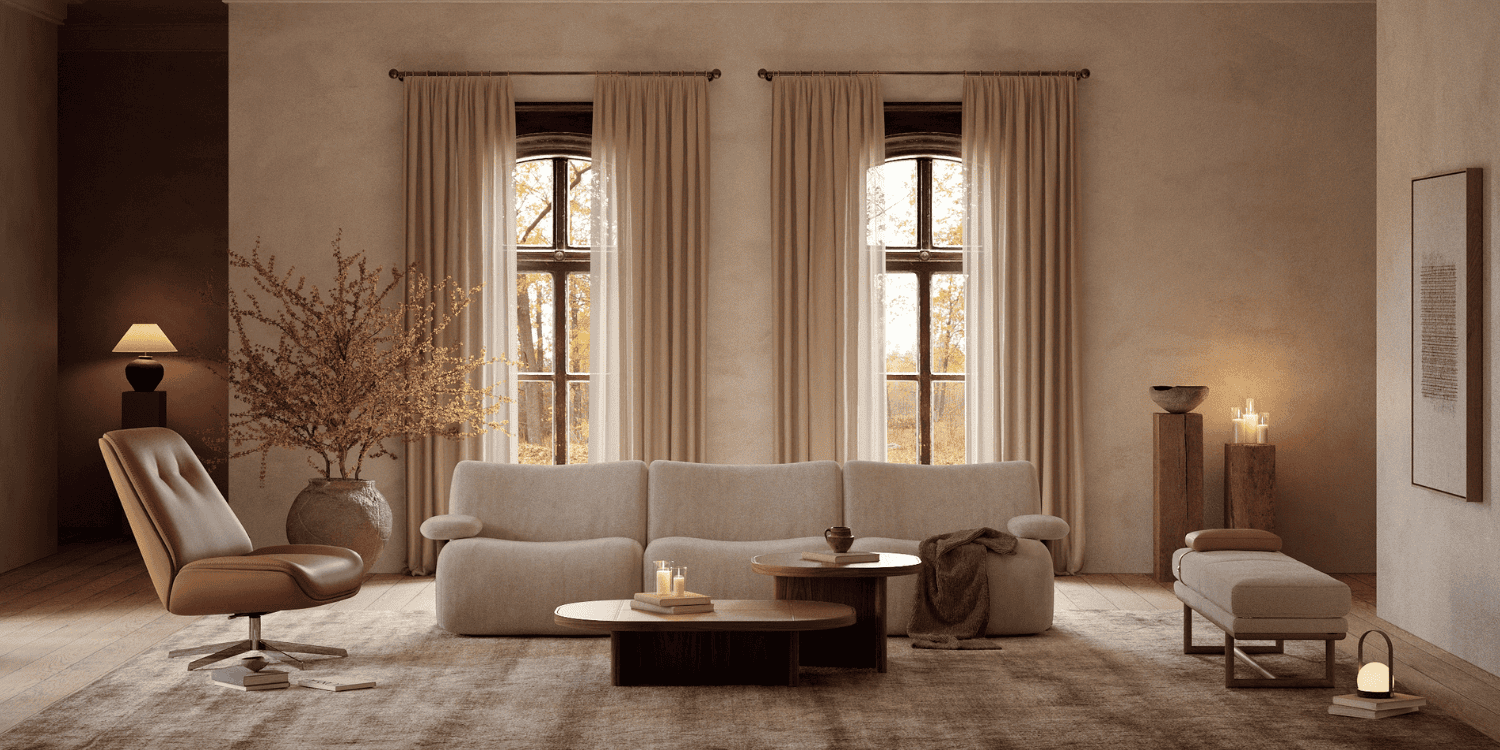
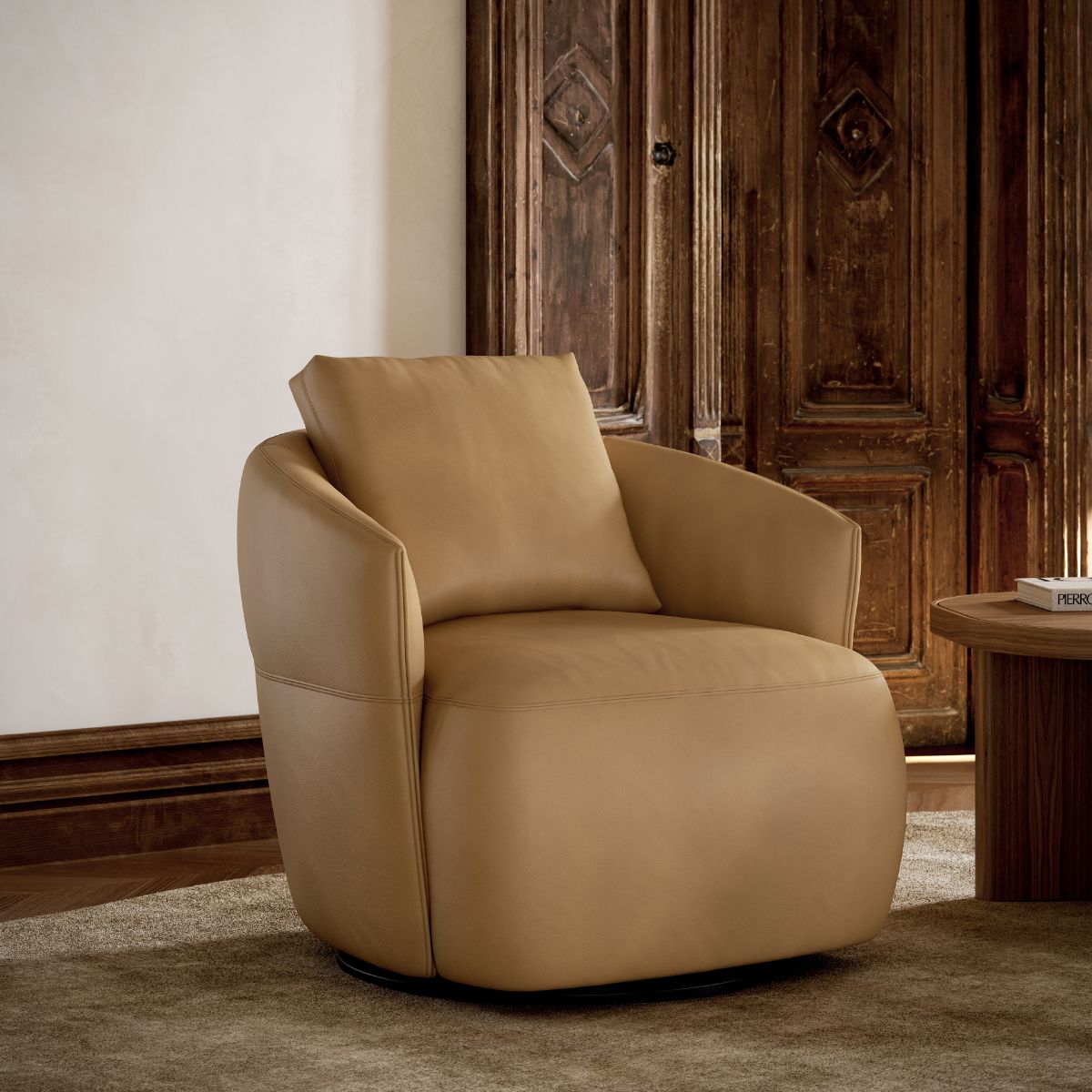
A design such as our Alton Armchair, with its generous proportions and inviting silhouette, naturally commands more visual attention and is therefore best suited to spaces that can accommodate its presence.
Accent Chair
An accent chair generally features:
- A lighter visual footprint;
- A more decorative role;
- Greater flexibility within layouts;
- Easier integration into smaller spaces.
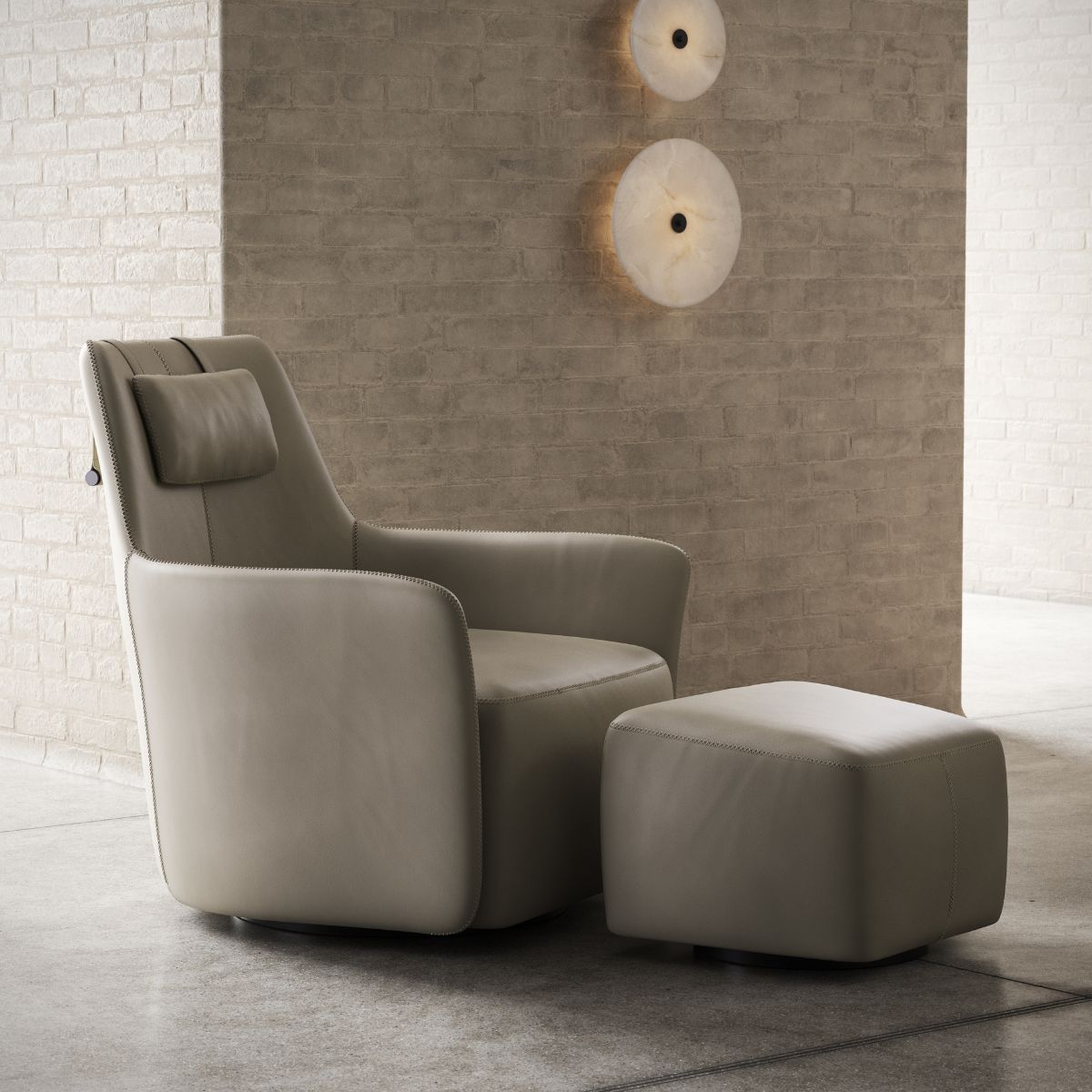
Accent chairs support the overall composition rather than dominate it.
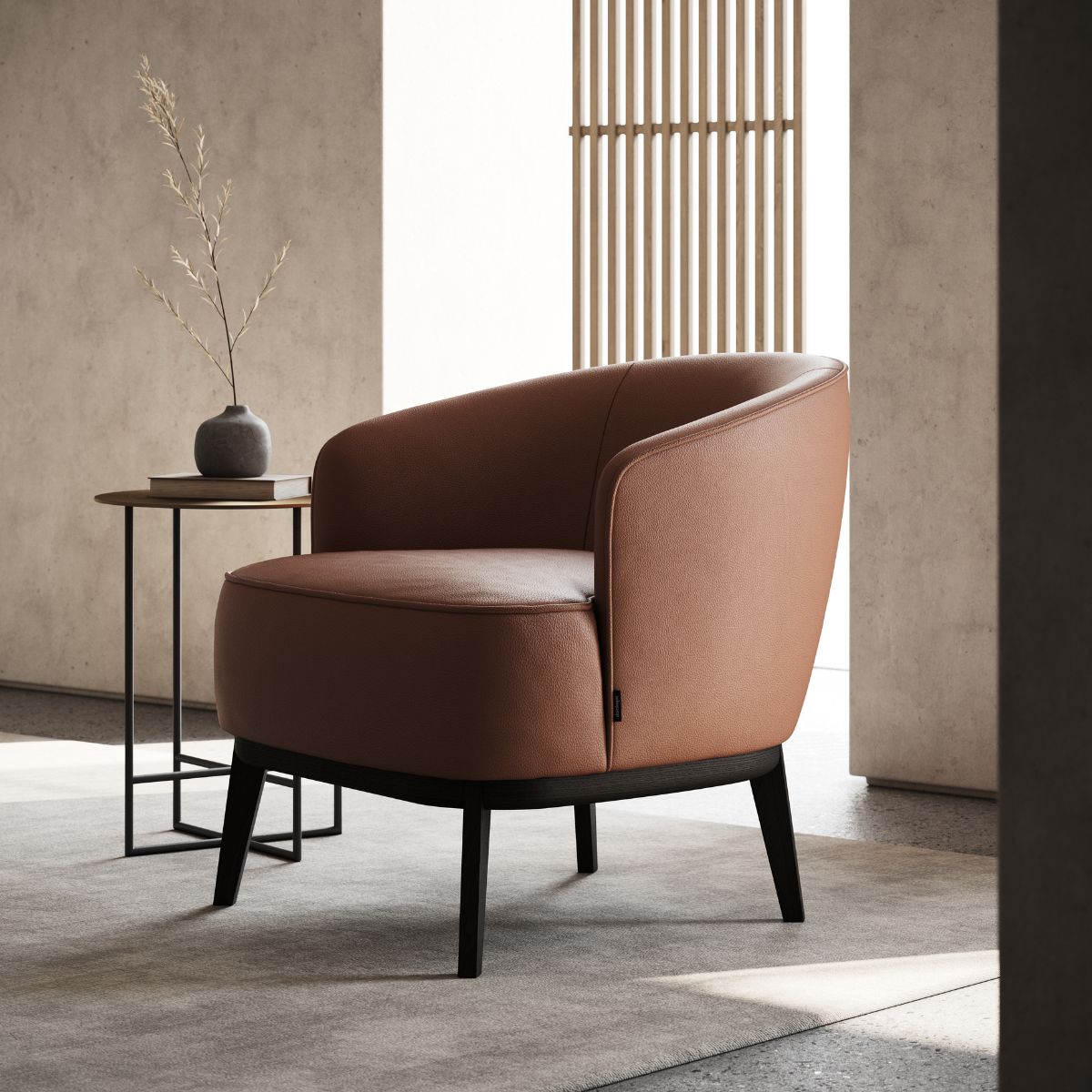
Pieces like our Megan Armchair, depending on configuration and finish selection, can function as elegant accent seating that enhances a room without becoming its primary focal point.
Neither category is inherently better. The appropriate choice depends entirely on the room’s proportions, intended use and visual hierarchy.
Think in Visual Weight, Not Just Dimensions
One of the most valuable lessons designers learn is that furniture does not occupy space solely through measurements. It occupies space visually.
Two armchairs with identical dimensions can appear dramatically different depending on their design.
Several factors influence visual weight:
Upholstery Volume
Generously upholstered pieces tend to feel larger and heavier.
Rounded forms, thick cushions and soft contours increase visual mass even when actual dimensions remain moderate.
Arm Thickness
Wide, upholstered arms create a substantial presence.
Slim or open-frame arms often make a chair appear lighter and less dominant.
Backrest Height
Tall backs naturally attract attention and create vertical emphasis.
Lower profiles often feel more relaxed and visually unobtrusive.
Leg Design
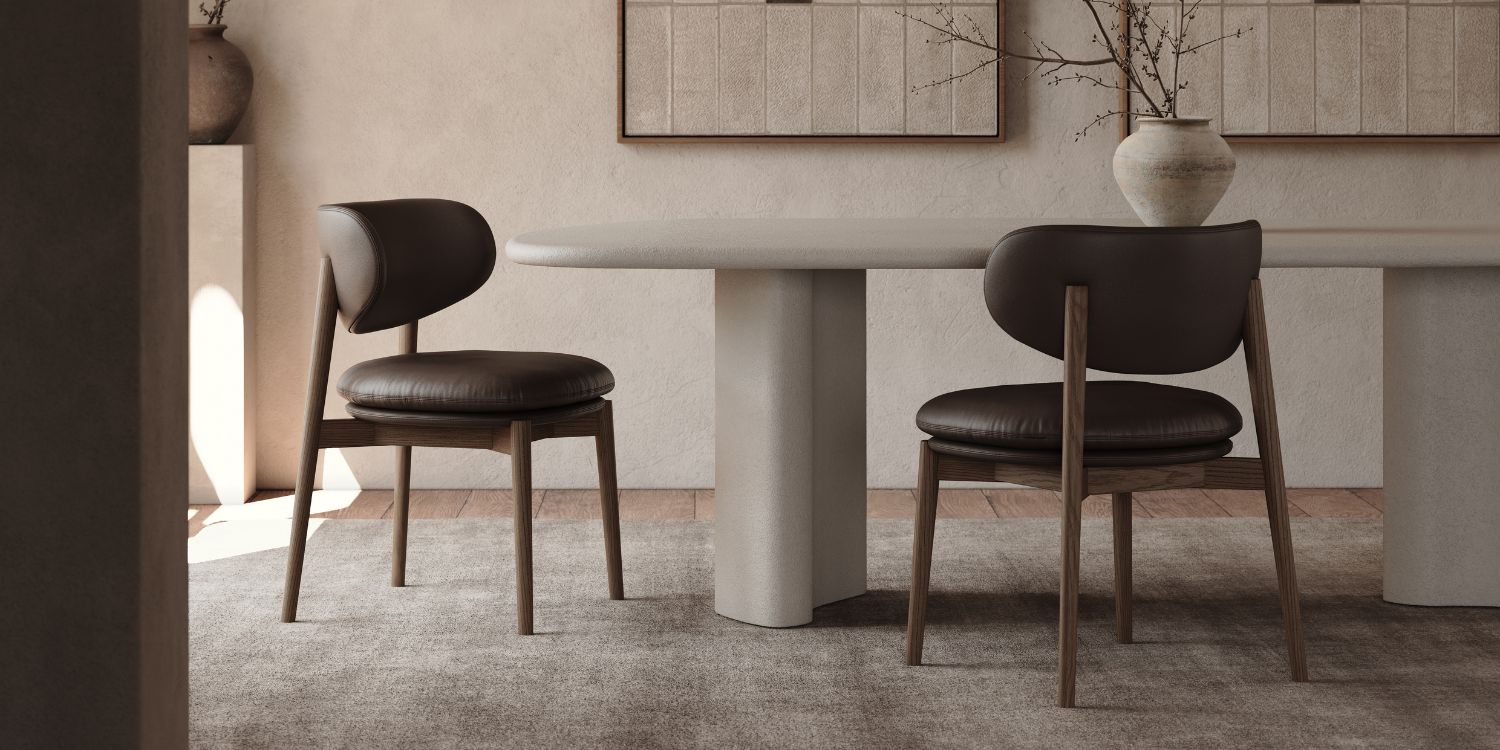
Exposed legs create visual openness by allowing the eye to travel beneath the chair.
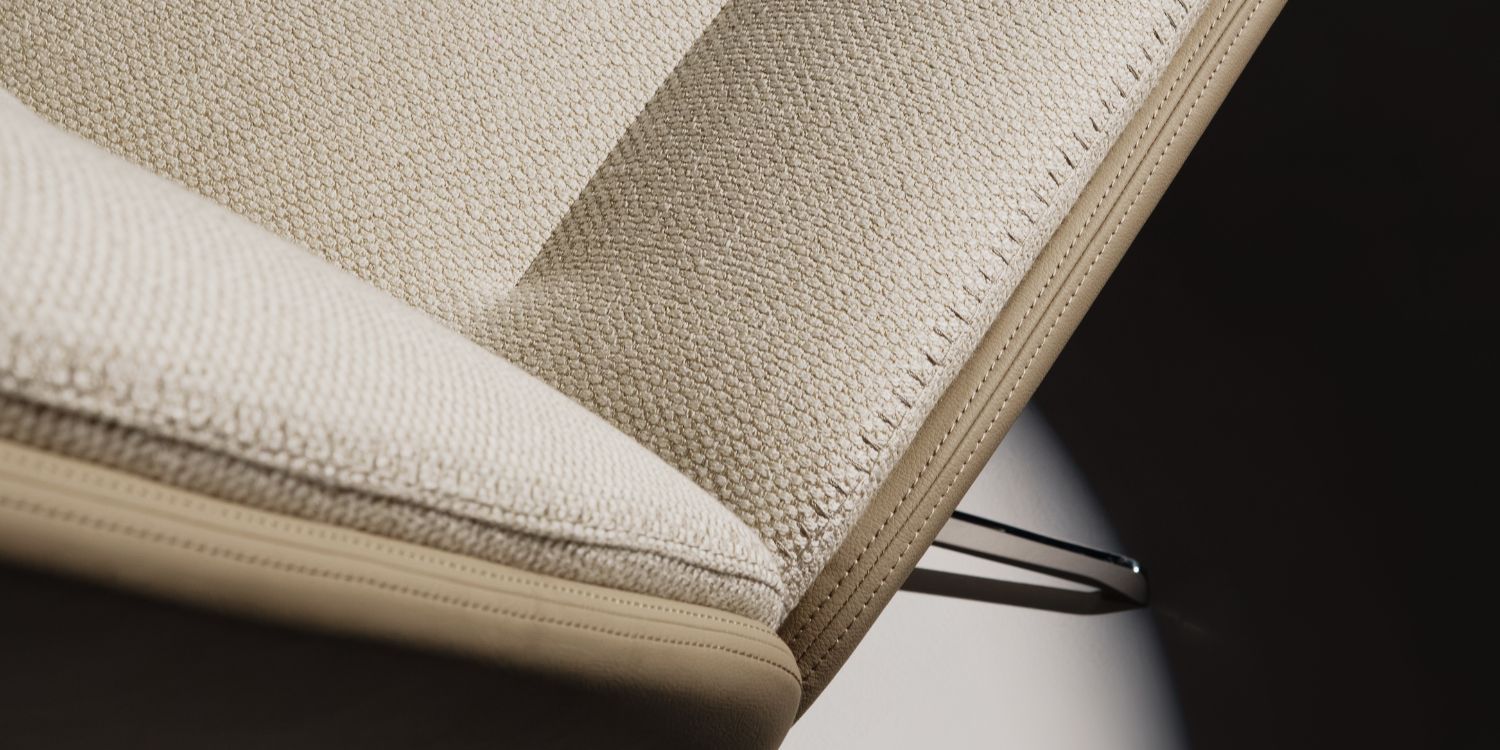
Fully upholstered bases often appear heavier and more grounded.
Material Choices
Dark fabrics, textured upholstery and dense materials generally increase perceived weight.
Light fabrics, metal detailing and open structures tend to reduce it.
For example, our Alexander Armchair features a distinctive curved form that creates a strong visual presence despite not necessarily occupying more floor area than a simpler design.
This is why designers should evaluate perceived scale as carefully as physical dimensions.
The Five Rules of Seating Proportion
Rule 1: Respect the Sofa
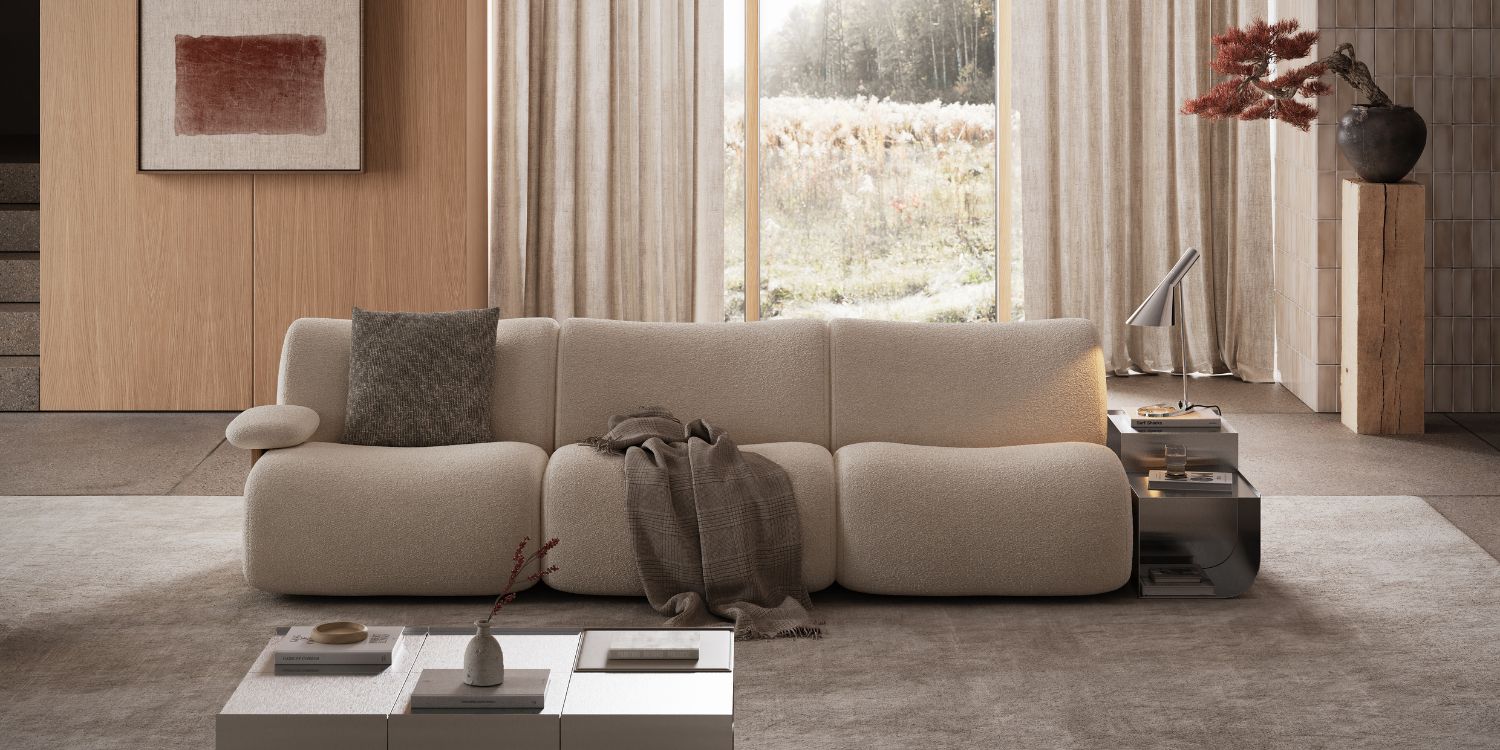
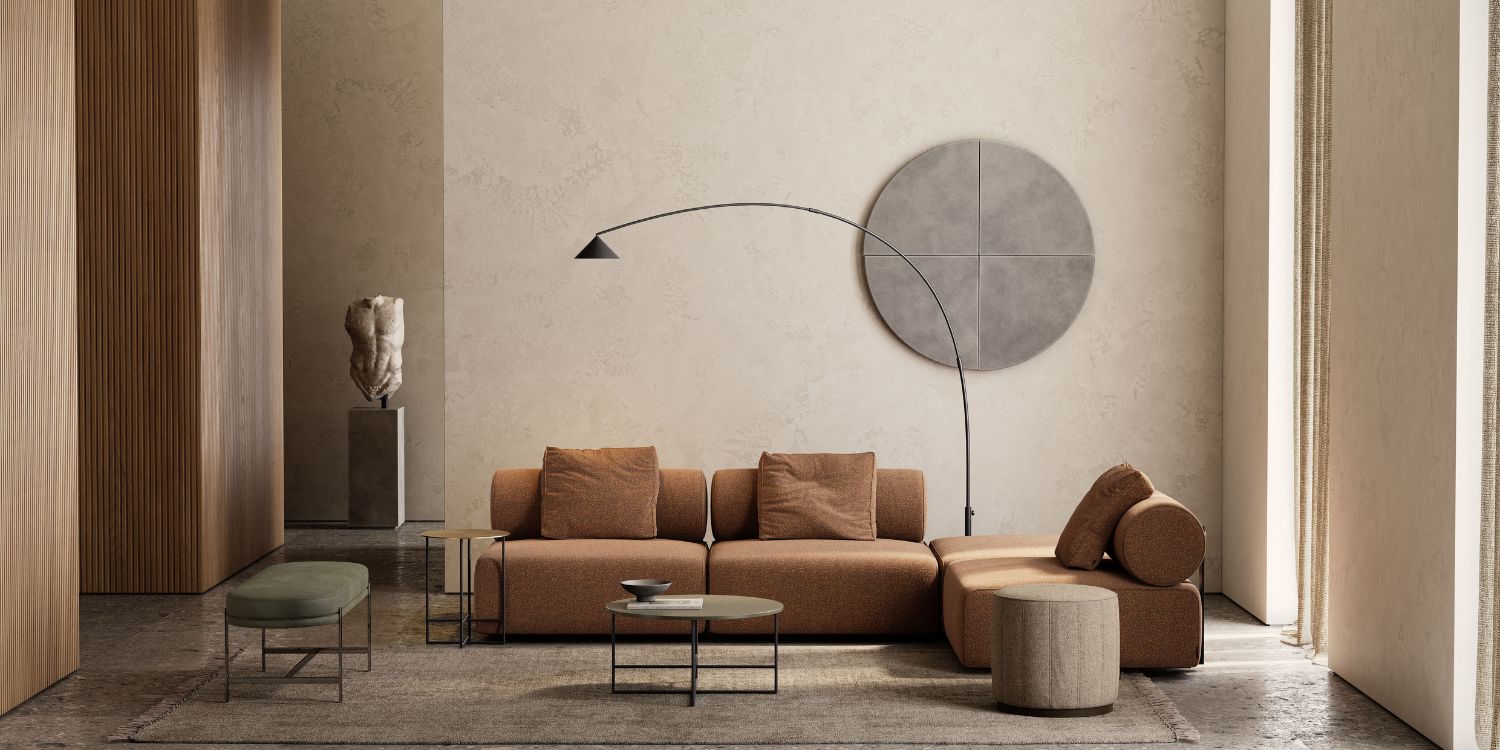
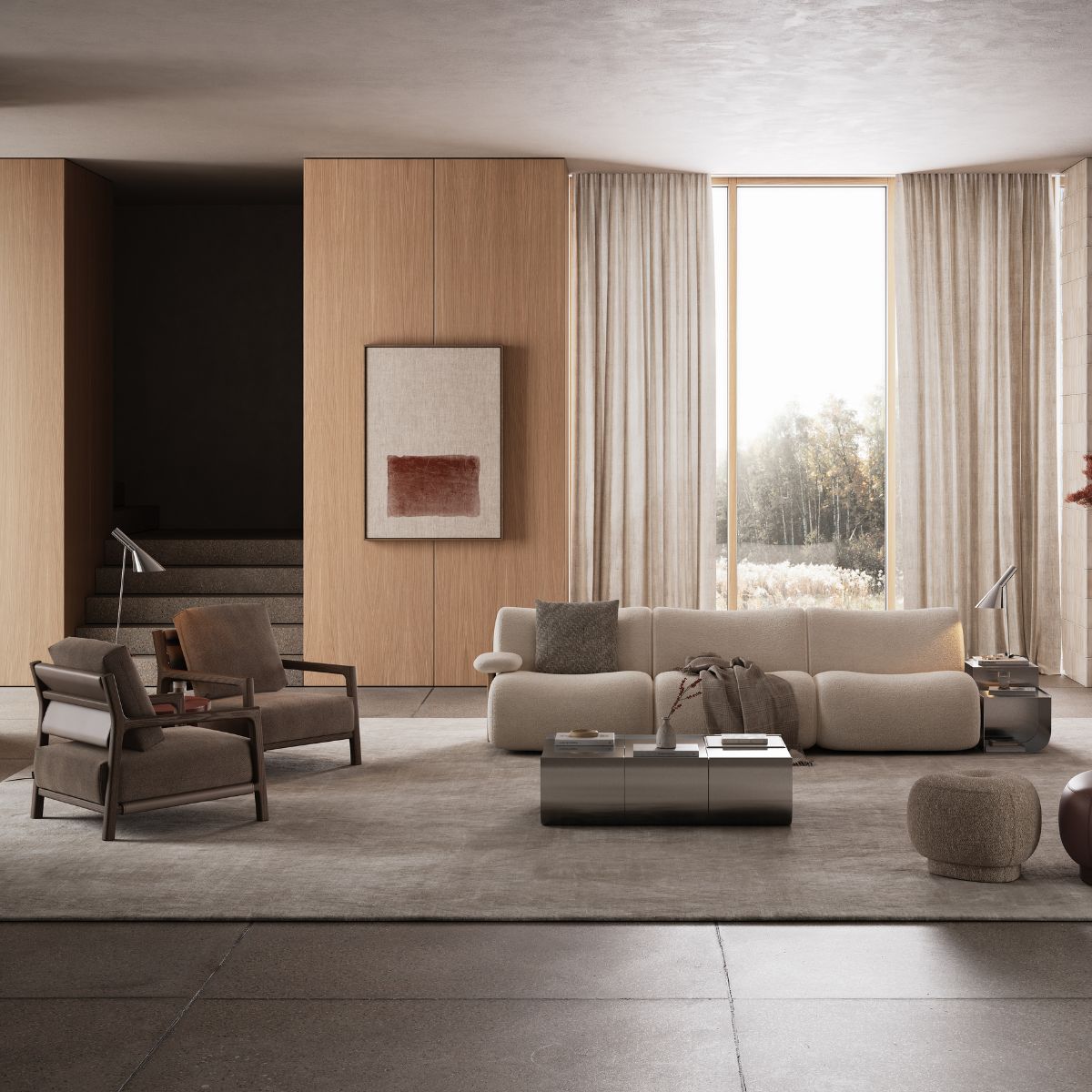
The sofa is usually the dominant seating element within a living room. Armchairs should support that hierarchy rather than compete with it.
As a general guideline:
- Chairs should feel proportionally related to the sofa;
- They should not exceed the sofa’s visual dominance;
- Their height and mass should complement rather than overpower.
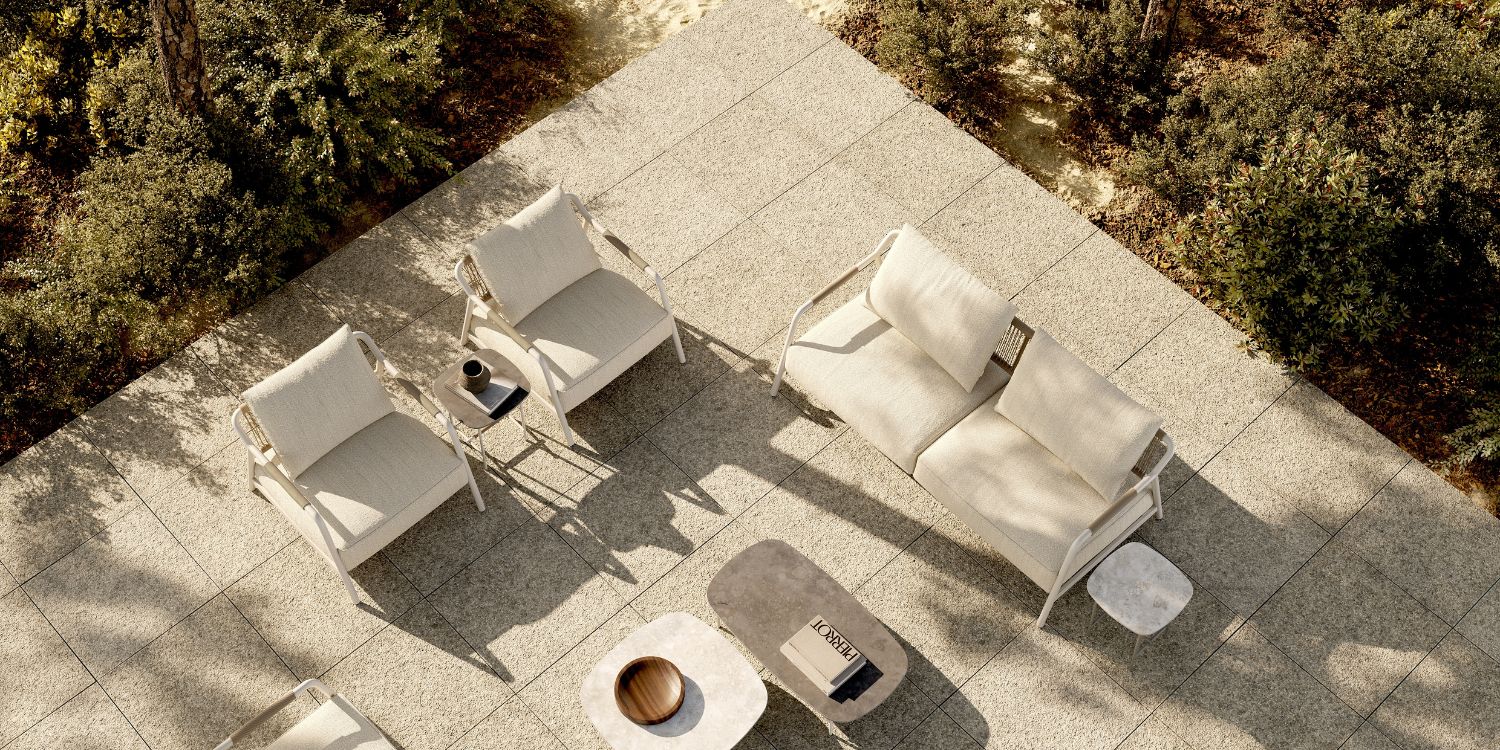
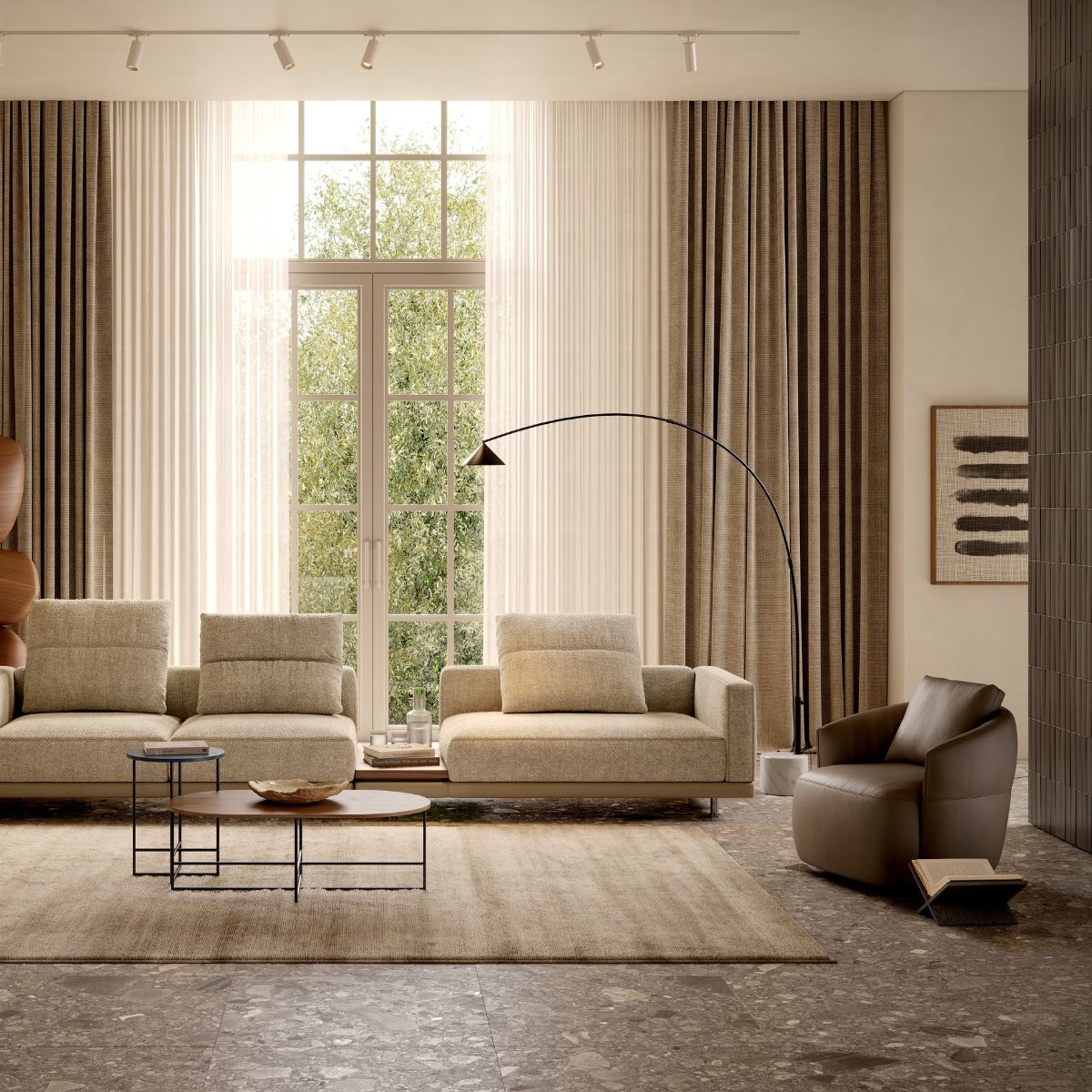
For example, placing two oversized lounge chairs opposite a compact two-seat sofa often creates visual imbalance. The room begins to revolve around the chairs instead of the intended focal point.
When choosing an armchair, always evaluate it relative to the sofa first – not in isolation.
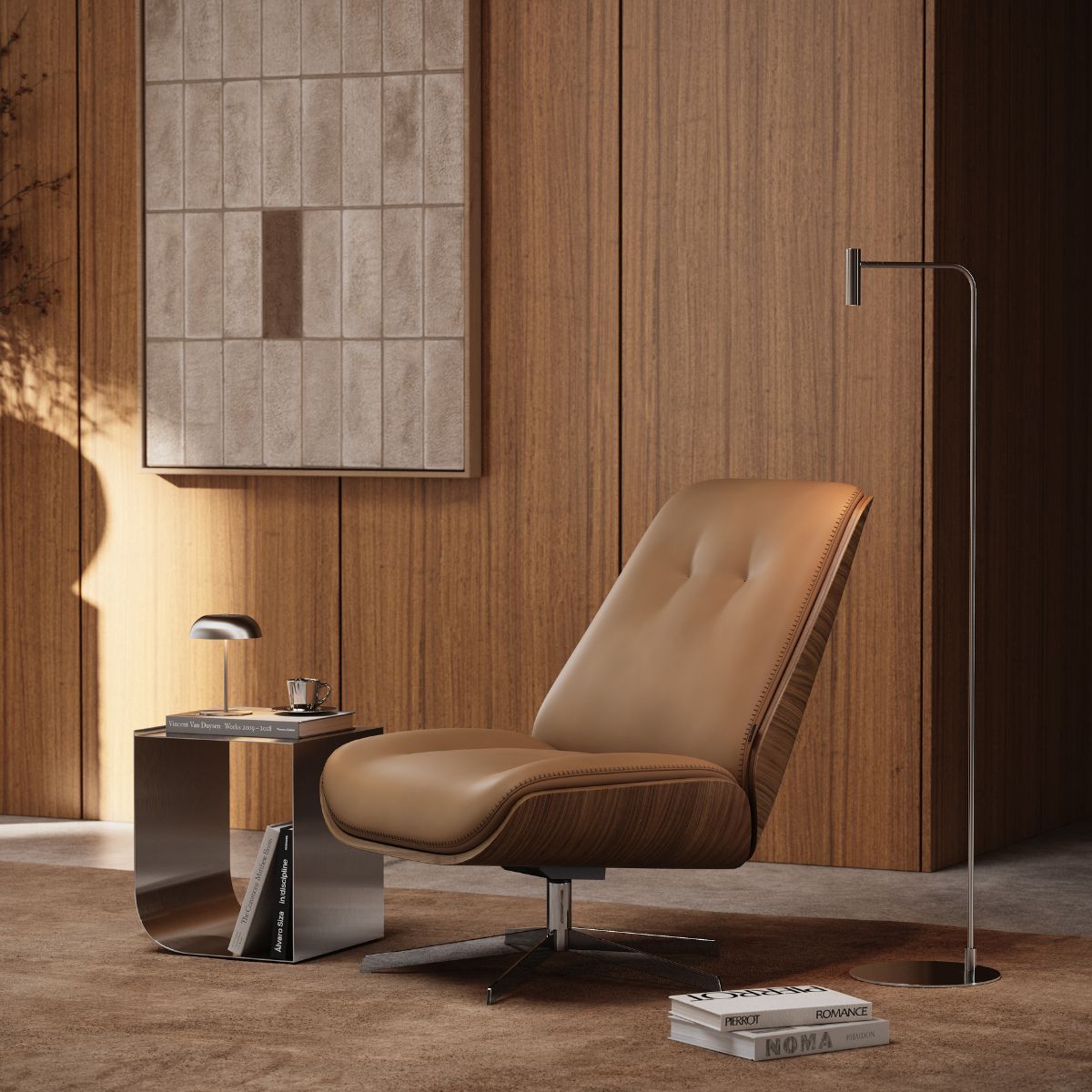
Rule 2: Consider Ceiling Height
Vertical scale is frequently overlooked. An armchair may fit perfectly within the floor plan while still feeling disproportionate due to ceiling height.
In rooms with:
Low ceilings:
- Lower-profile seating often performs better;
- Open bases create visual lightness;
- Excessive verticality can make the room feel compressed.
High ceilings:
- Taller backs can help balance architectural volume;
- More substantial seating may be necessary to avoid feeling underscaled.
Our Elliot Armchair, for instance, can offer a more grounded presence in rooms where substantial architecture requires furniture with stronger visual anchoring.
Rule 3: Match the Room’s Visual Density
Architecture influences furniture selection more than many designers realise.
A minimalist room with large windows and clean surfaces typically benefits from lighter seating forms.
Conversely, interiors featuring:
- Detailed mouldings;
- Rich textures;
- Layered materials;
- Architectural ornamentation,
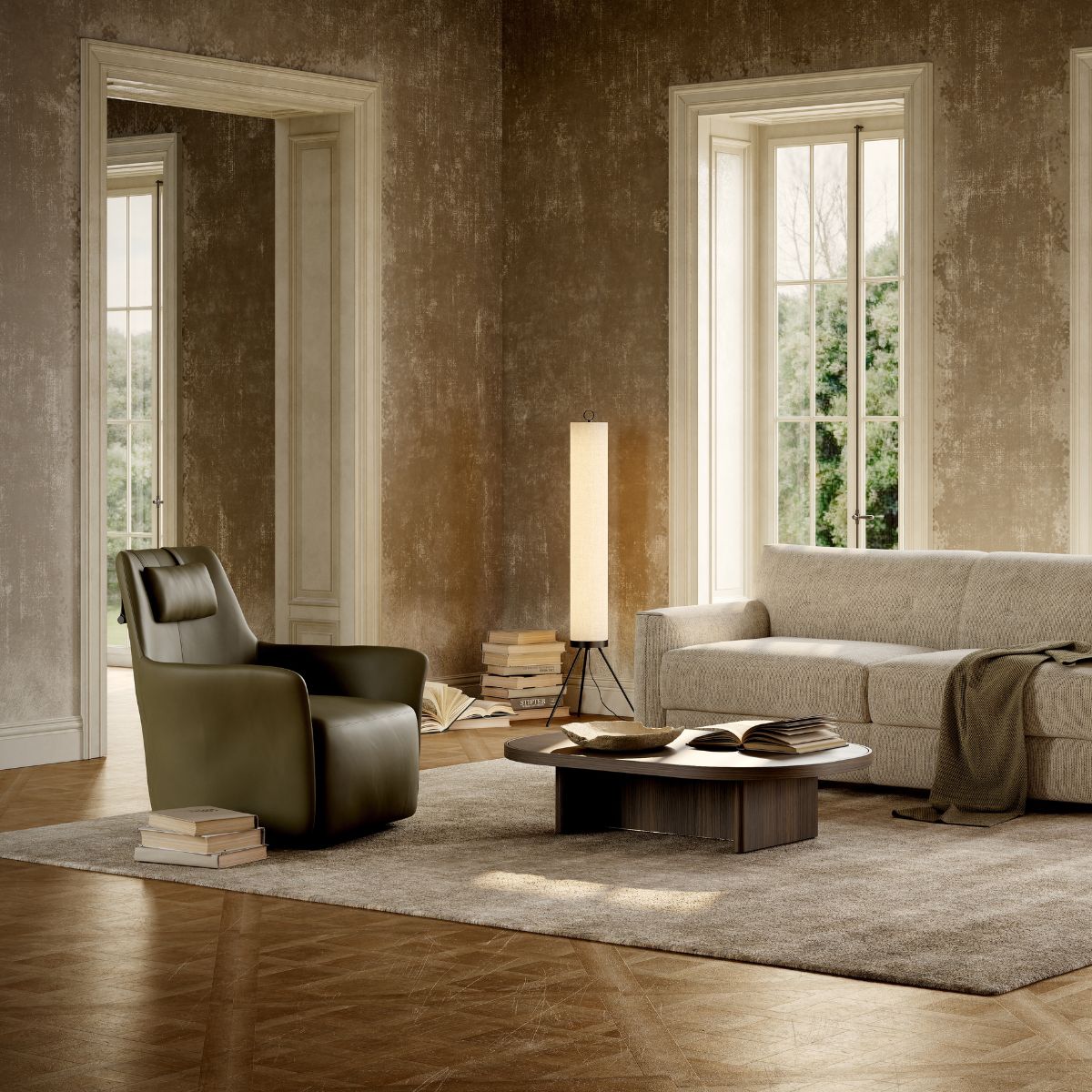
can comfortably accommodate armchairs with greater visual mass.
Furniture should respond to the visual density of the room rather than exist independently from it.
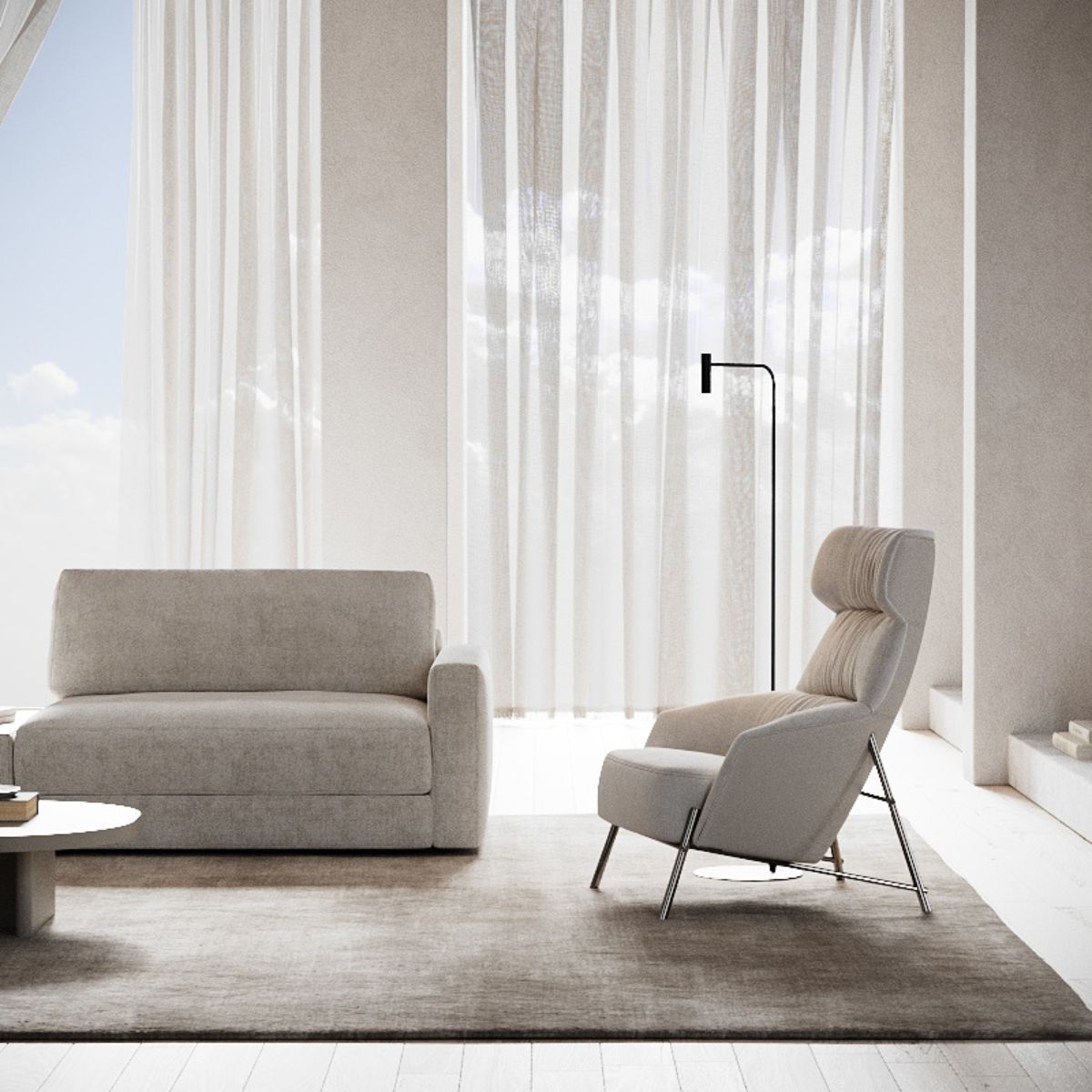
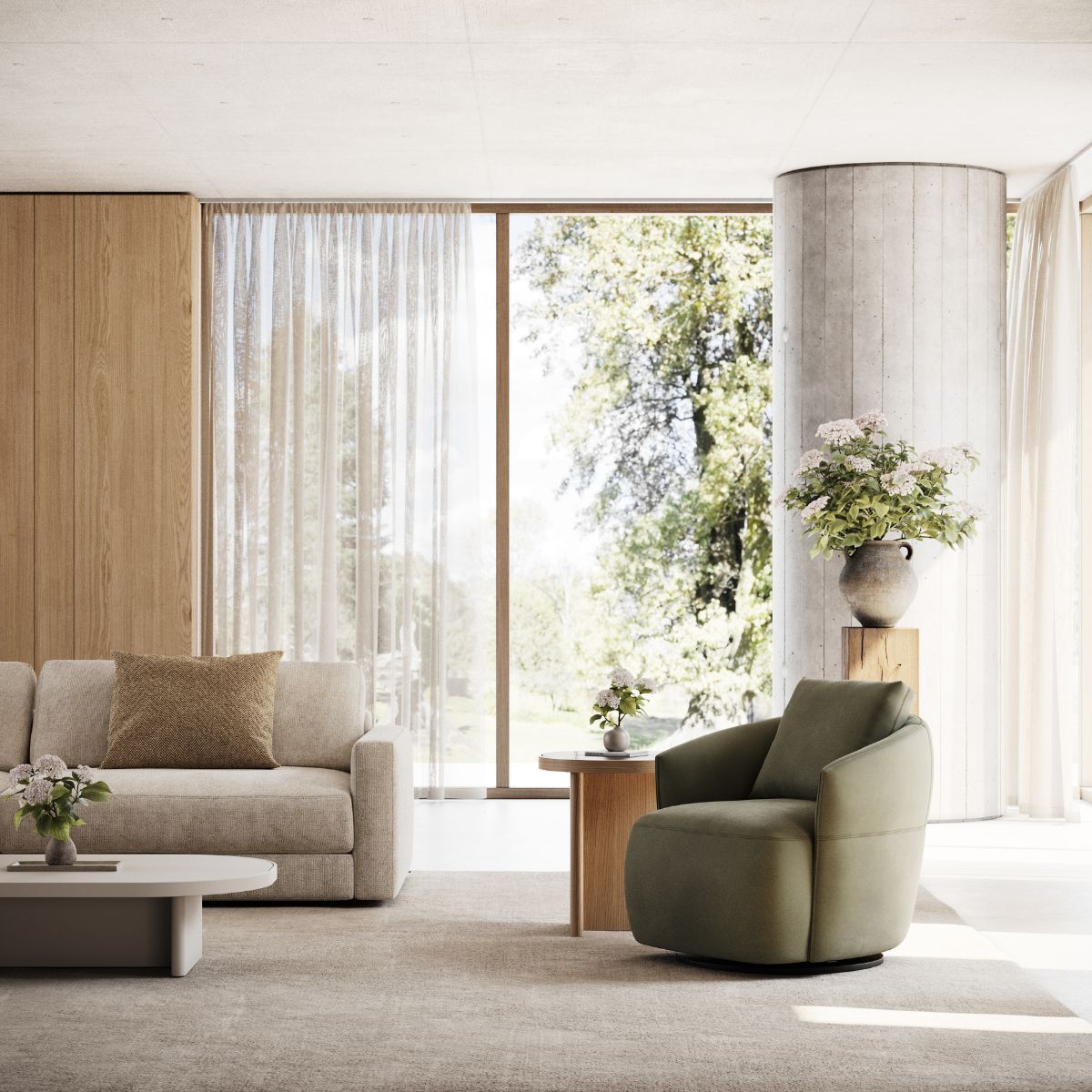
Rule 4: Leave Space to Breathe
One of the most common mistakes in living room seating layouts is attempting to maximise furniture quantity.
Successful rooms contain negative space. Circulation paths should remain clear and intuitive.
Ask yourself:
- Can someone move comfortably around the seating group?
- Does the arrangement feel compressed?
- Is there sufficient visual breathing room between pieces?
A beautifully designed armchair loses much of its impact when squeezed into an overcrowded layout.
Negative space is not wasted space – it is an essential design tool.
Rule 5: Balance Comfort with Presence
Clients often assume that larger armchairs equal greater comfort. This is not always true.
Well-designed seating can provide exceptional comfort without overwhelming a room.
The most successful statement chairs achieve a careful balance:
- Comfortable enough to encourage use;
- Distinctive enough to create character;
- Proportionate enough to support the overall composition.
Our Juliet Armchair exemplifies how elegant curves and carefully considered proportions can create visual impact without excessive bulk.
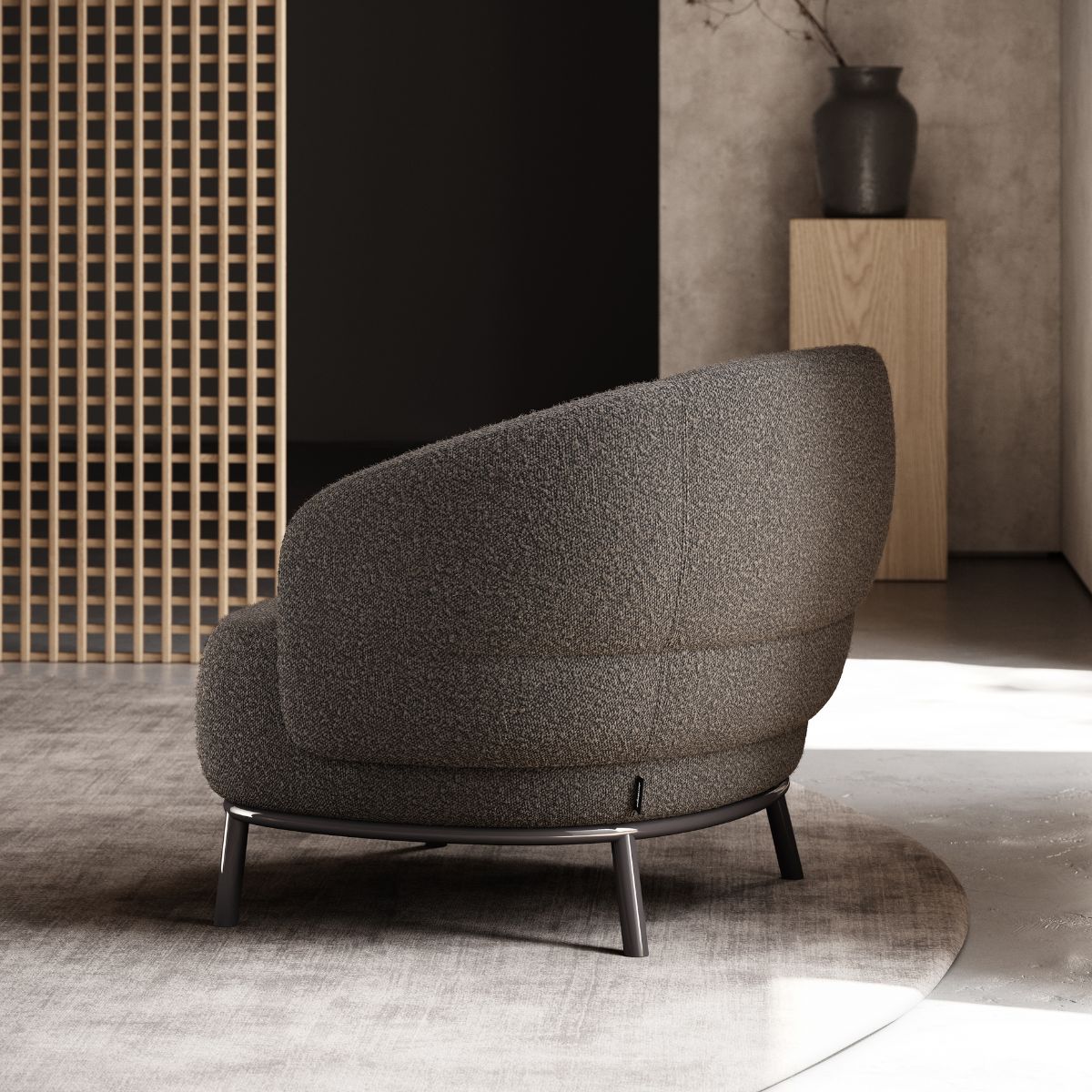
What Makes a Successful Statement Chair?
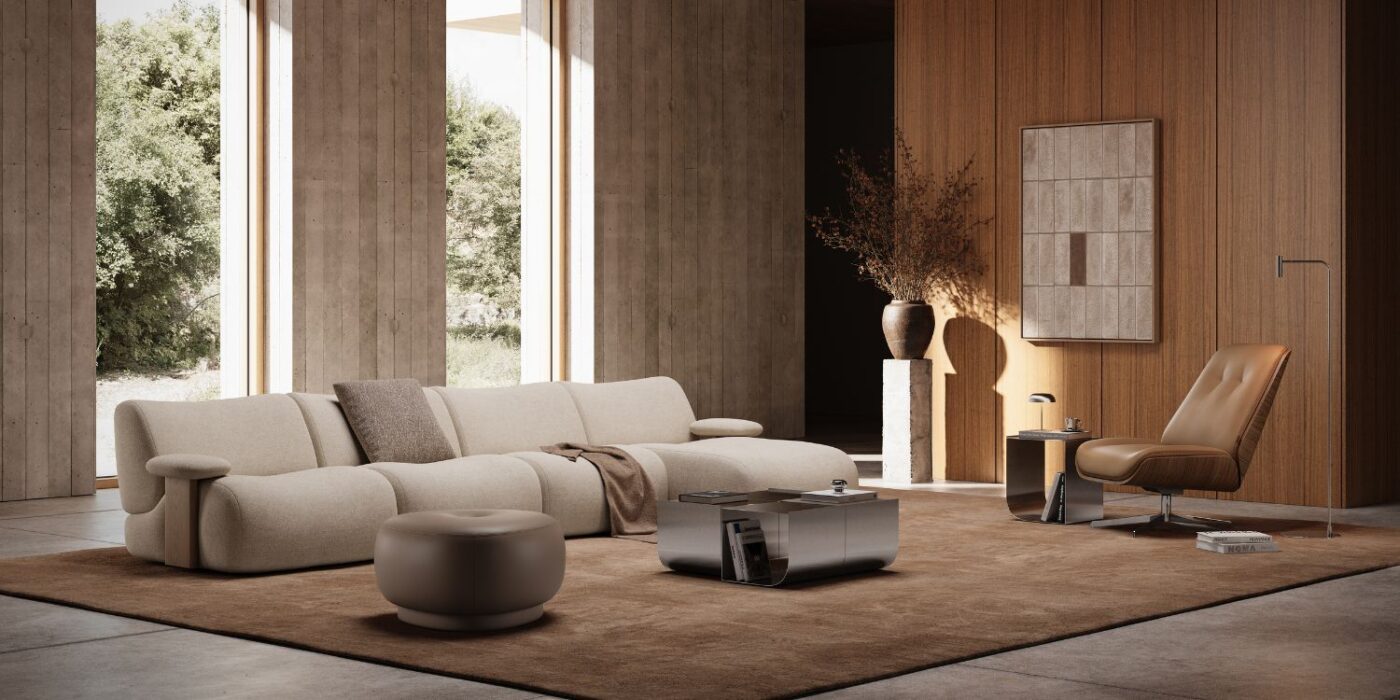
The most successful statement chairs are not necessarily the largest or most dramatic. Instead, they combine several qualities:
Proportion
The armchair feels naturally connected to its surroundings.
Comfort
It invites use rather than serving purely decorative purposes.
Materiality
Finishes and upholstery contribute to the room’s overall visual language.
Craftsmanship
Quality construction enhances both performance and longevity.
Timeless Design
Well-proportioned furniture tends to remain relevant long after trends change.
When these qualities align, an armchair becomes more than a functional object – it becomes an integral part of the room’s architecture.
Scale Check Checklist
Before approving any armchair specification, review the following checklist:
✓ Does the armchair feel proportionate to the sofa?
✓ Does its height relate appropriately to the room’s ceiling height?
✓ Is the visual weight suitable for the architecture and material palette?
✓ Have circulation paths been tested and verified?
✓ Does the armchair support the room’s intended hierarchy?
✓ Does it complement rather than compete with other focal points?
✓ Have you evaluated the piece beyond product photography?
✓ Does the armchair’s role within the room justify its visual presence?
✓ Is there sufficient negative space around it?
✓ Can you confidently explain its scale rationale to the client?
If multiple answers are “no”, reconsider the specification before proceeding.
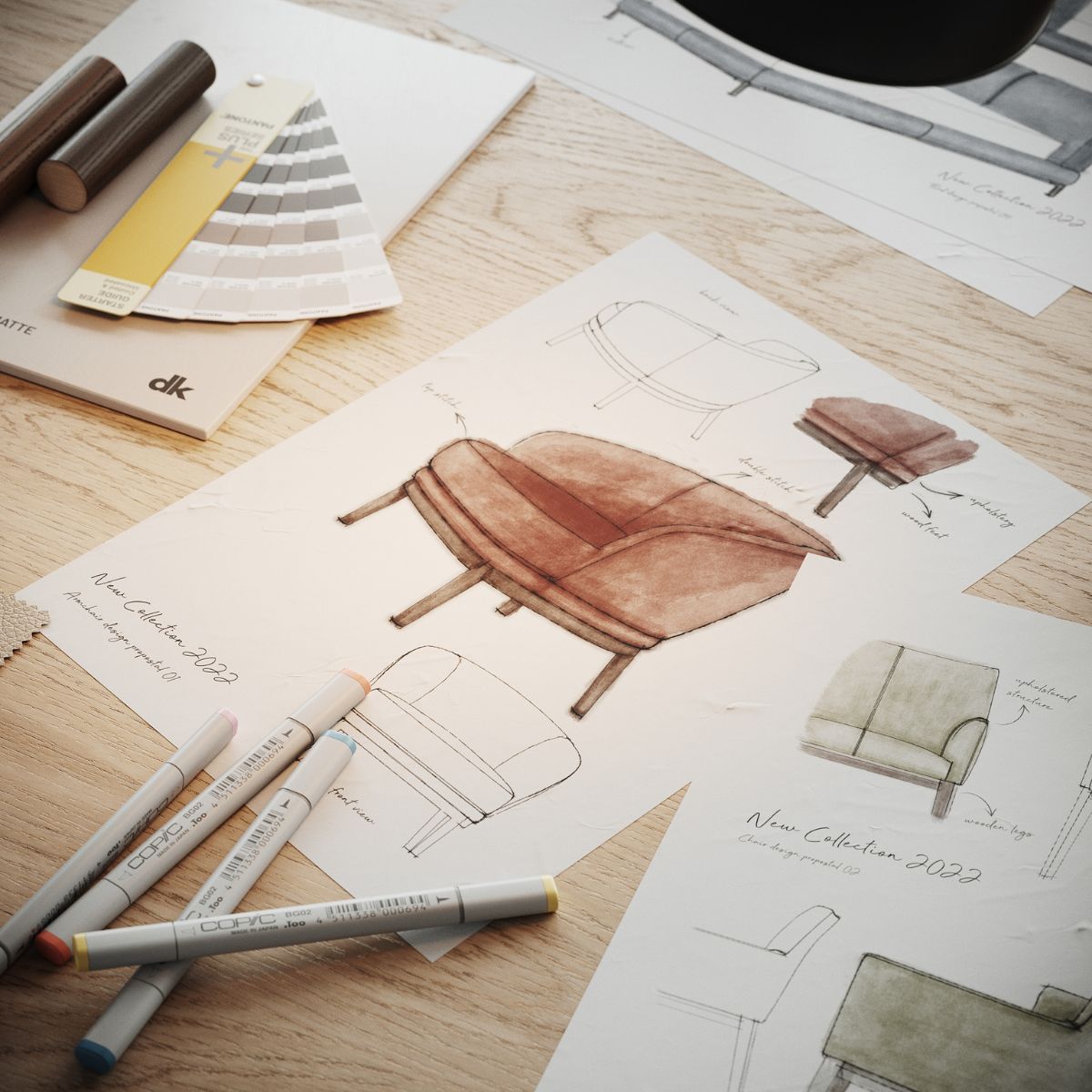
The difference between a successful armchair specification and a costly design mistake rarely comes down to style. It comes down to scale literacy.
The most effective designers understand that furniture exists within a broader spatial composition. They evaluate visual weight, proportion, circulation and hierarchy before making aesthetic decisions.
Whether selecting a substantial armchair or a refined accent chair, the objective is always the same: create balance.
Because the best seating choices are rarely the biggest, boldest or most dramatic. They are the ones that feel as though they were always meant to be there.
YOU MAY ALSO LIKE: Upholstery Grades Explained: Helping Clients Understand Fabric Costs
We are working every day to bring you the most stylish ideas to fulfil your inspiration and to create the best interior design projects, so feel free to follow our Instagram Page and subscribe to our newsletter.